
TL;DR

Get health and wellness essentials delivered free with Prime
- Fast, free delivery on millions of items
- Prime Video, Amazon Music and more included
- Member-only deals all year
A study tracking 316,542 adults in South Korea found that people with the lowest hemoglobin levels—and, for some outcomes, the highest levels—were more likely to receive a dementia diagnosis over as many as 15 years. The observational findings do not show that hemoglobin causes dementia or that changing its level prevents it.
A study of 316,542 South Korean adults found that hemoglobin levels recorded during routine health screenings were associated with dementia diagnoses up to 15 years later. The research, presented at the 39th ECNP Congress and published in the Journal of Alzheimer’s Disease, suggests a common blood-test measure may help researchers examine long-term links between physical and brain health—but it does not establish that hemoglobin causes dementia.
Participants were at least 40 years old and had national health screenings in 2004 or 2005. Researchers grouped them into five equal-sized categories according to hemoglobin level, then used national health insurance records to identify new dementia diagnoses through the end of 2019. The follow-up lasted up to 15 years.
Compared with the group used as the reference for the lowest dementia rate, people in the lowest hemoglobin fifth had a 16% higher risk of all-cause dementia, while those in the highest fifth had a 7% higher risk. For Alzheimer’s disease, the higher risk was mainly seen in the lowest fifth, at 14% above the reference group.
Results varied for vascular dementia, which is associated with reduced blood flow to the brain. The lowest hemoglobin fifth had a 19% higher risk, and the highest fifth an 18% higher risk, compared with the reference group. The pattern across all five categories was not straightforward. Researchers also reported that the associations were clearer and more consistent among women than men.
What Routine Blood Results Could Reveal
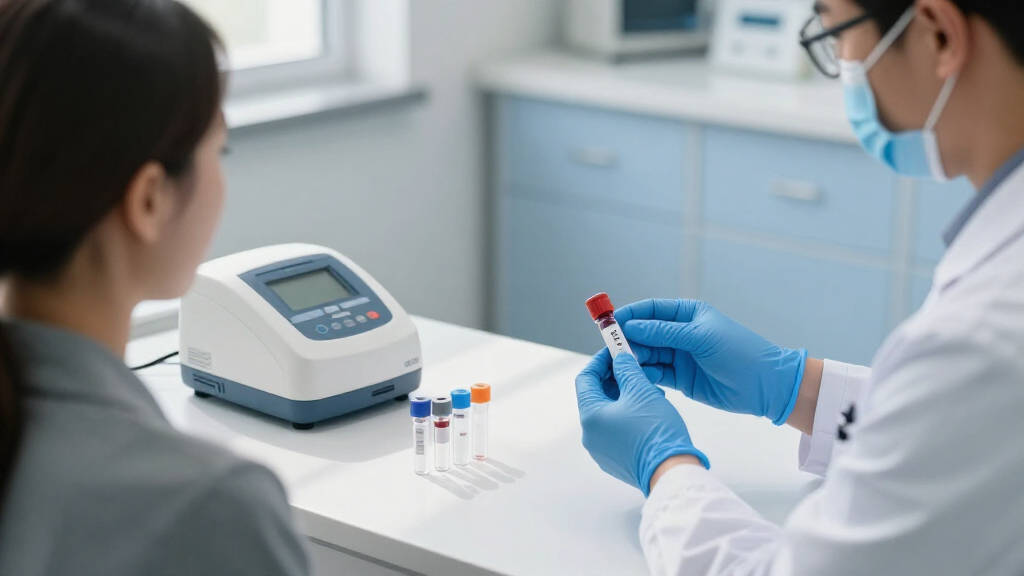
Hemoglobin is the oxygen-carrying protein in red blood cells and is routinely measured in standard blood tests. Because the measure is already familiar and commonly recorded, an association with later dementia could give researchers a way to investigate how overall health relates to brain health across long periods. It is not, on its own, a dementia screening result or a prediction of an individual’s future.
The findings also point to a question about health at midlife and later life: whether conditions reflected in unusually low or high hemoglobin might help identify groups for further study. The research does not show that treating a hemoglobin result will reduce dementia risk, nor does it establish that changing the number would alter a person’s brain health.
Products Worth Considering

Withings BPM Connect Wi-Fi and Bluetooth Blood Pressure Monitor

Oral-B iO Series 3 Rechargeable Electric Toothbrush for Adults, Black

Oura Ring 4 Smart Ring – Silver – Size 8
As an affiliate, we earn on qualifying purchases.
How Researchers Followed Participants
The analysis drew on health-screening data from South Korea in 2004–2005 and linked it to national insurance records for subsequent diagnoses. Its large cohort and long follow-up allowed researchers to compare dementia outcomes across hemoglobin categories. The study was observational: participants were not assigned to have different hemoglobin levels, and the analysis found associations rather than testing a treatment.
Low hemoglobin is commonly associated with anemia. The report notes that unusually high levels can be related to factors including smoking, dehydration, lung or heart disease, and other medical conditions. These possibilities illustrate why a hemoglobin result can reflect broader health circumstances rather than a direct effect on the brain.
“The findings do not show that hemoglobin itself causes dementia, but suggest that abnormal hemoglobin levels may be a visible marker of wider physical vulnerability relevant to brain health.”
— Dr Hyun Soo Kim, lead researcher and assistant professor at Dong-A University College of Medicine
What the Association Cannot Establish
The study cannot show that low or high hemoglobin directly causes dementia. Other health conditions or factors could influence both hemoglobin and dementia risk. Researchers also noted that early, undiagnosed dementia processes might affect nutrition, frailty, weight loss, or anemia, potentially contributing to the observed association.
The findings come from one national cohort, and it remains unclear whether the same patterns apply to people with different backgrounds and health systems. The report does not establish why associations differed by dementia type or were more consistent in women, or whether hemoglobin adds useful predictive information beyond other health measures.
There is also no evidence in this study that correcting an abnormal hemoglobin level prevents dementia. A result outside the usual range can have different explanations, and the research does not determine what caused any participant’s result.
Further Studies Needed Across Populations
Researchers will need to test whether the association appears in groups with different demographic and health backgrounds, as well as investigate possible explanations for the differences by dementia type and sex. Further work would also need to establish whether hemoglobin improves risk assessment and whether any particular response to abnormal levels affects dementia outcomes.
For now, the study’s authors advise that abnormal hemoglobin results be discussed with a doctor because they may point to underlying health issues. They specifically caution against taking iron or trying to raise or lower hemoglobin as a dementia-prevention measure on the basis of these findings.
Key Questions
Does a routine hemoglobin test predict whether someone will develop dementia?
No. The study found group-level associations in a large cohort, but it does not establish an individual prediction or show that the test can diagnose future dementia.
Did the study show that hemoglobin causes dementia?
No. It was observational and cannot establish cause and effect. Other health factors, or early dementia-related changes, may help explain the association.
Which hemoglobin levels were associated with higher dementia risk?
The lowest fifth of participants had a 16% higher risk of all-cause dementia than the reference group; the highest fifth had a 7% higher risk. Findings varied by dementia type, and these comparisons do not mean that a particular individual’s risk rises by the same amount.
Should people take iron supplements to reduce dementia risk?
No such benefit was tested or established. The lead researcher cautioned against taking iron or changing hemoglobin levels to prevent dementia based on this study. Discuss an abnormal result with a qualified health professional.
Source: rss