TL;DR

Get health and wellness essentials delivered free with Prime
- Fast, free delivery on millions of items
- Prime Video, Amazon Music and more included
- Member-only deals all year
University of Prince Edward Island researcher Jay Penney is using human stem-cell-derived microglia and neurons to investigate how a rare RAB32 variant may contribute to Parkinson’s disease. The Parkinson Canada-funded project is one year into a three-year grant; researchers have not yet established how the variant affects brain cells or whether it could lead to a treatment.
Jay Penney, an associate professor at the University of Prince Edward Island, is studying how a rare Parkinson’s-linked variant of the RAB32 gene affects human brain cells, using stem-cell-derived microglia and neurons. The Parkinson Canada-funded project is still in its early stages, and the research has not yet shown how the variant contributes to disease or whether it points to a treatment.
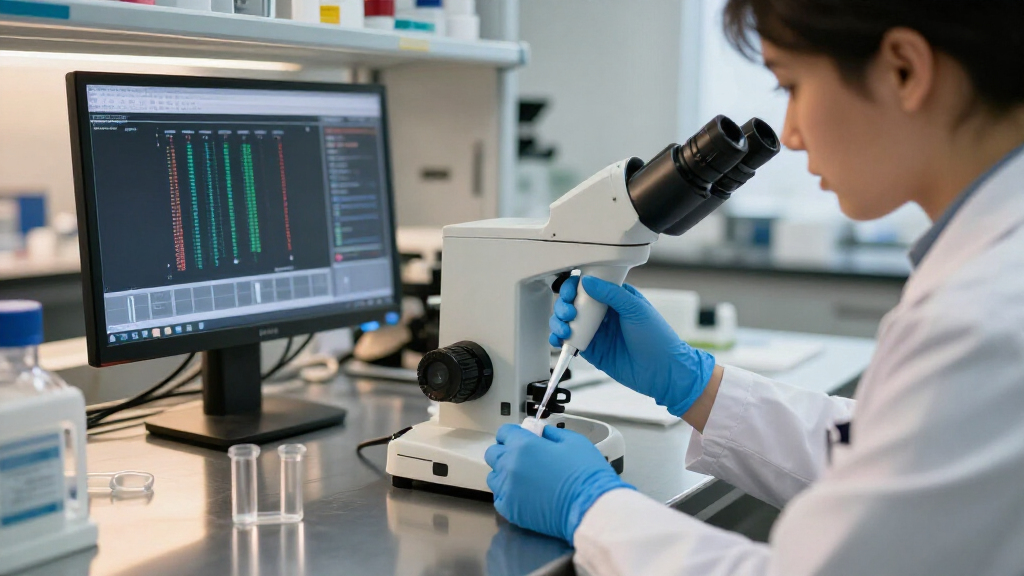
Penney’s team has genetically modified human microglia and neurons grown in the lab to carry the RAB32 variant. The researchers are observing how the cells function and examining the gene’s interactions with other proteins. Microglia are immune cells in the brain, a cell type Penney has experience studying and one he believes may have an important role in Parkinson’s.
RAB32 encodes a protein that can regulate the activity of other proteins. The Parkinson’s-linked variant may alter the protein’s shape and make it overactive, according to the report. That possibility is a research hypothesis, not a finding established by Penney’s work so far. The team is also looking beyond known interactions, since RAB32 has mostly been studied in other kinds of cells and may affect pathways specific to the brain.
Among the proteins being examined are LRRK2, which is implicated in Parkinson’s, and PKA and ERK, which help regulate many cellular processes. Penney said the project takes a broad approach to understanding what RAB32 may be doing in brain cells. He hopes that results from human cells could help inform future research, but the lab has not reported a treatment candidate or clinical result.
What the RAB32 Study Could Reveal
The project focuses on a rare genetic risk factor that could offer clues about biological processes involved in Parkinson’s. The source report says carrying one copy of the variant has been associated with a 13-to-65-fold increase in risk. That range describes reported risk linked to the variant; it does not mean that everyone who carries it will develop Parkinson’s, and the report does not provide a baseline or further details about how that range was calculated.
Understanding how the variant affects cells could help researchers identify pathways that can be studied in other forms of the disease. Penney told Being Patient that clarifying how the mutation leads to disease could improve the chances of finding something researchers might modify. That is a research goal, not a promise of a future therapy. The work is currently in laboratory cells and does not establish whether any intervention would be safe or effective in people.
Products Worth Considering

Fitbit Versa 2 Health and Fitness Smartwatch with Heart Rate, Alexa, Music, Sleep and Swim Tracking

Levoit Core 600S-P Smart Air Purifier for Large Rooms up to 2933 ft²

Garmin Venu® 3 Premium Fitness Smartwatch 45mm Black
As an affiliate, we earn on qualifying purchases.
From Genetic Clue to Cell Study
The RAB32 variant was identified as a Parkinson’s risk factor a few years before the report. Penney said he saw it as a promising subject because the gene is frequently active in microglia, which are central to his lab’s expertise. He told Being Patient that little is known about what RAB32 does in the brain.
The report places the work within a wider research strategy: studying rare mutations to identify mechanisms that may matter for disease. It cites research into a rare Alzheimer’s-related mutation as an example of how investigating an unusual genetic form of illness can lead to new biological insights. That example does not show that RAB32 research will produce a similar outcome; it illustrates why researchers pursue rare variants.
Penney’s team is one year into a three-year Parkinson Canada grant. The current project uses human cells grown in a laboratory, rather than testing a treatment in patients. Penney said promising findings could support further research and funding, but the report does not describe results that have yet reached that stage.
“There’s very very little known about what it might be doing in the brain.”
— Jay Penney, associate professor at the University of Prince Edward Island, speaking to Being Patient
What Researchers Have Yet to Establish
The central question remains unanswered: how does the RAB32 variant affect microglia, neurons or other brain cells, and does that effect help cause Parkinson’s? The idea that the mutation makes the protein overactive is presented as a possibility. The report does not provide experimental results showing that this is what happens in the lab.
It is also unknown which cellular pathways will prove most relevant, whether changing RAB32 activity could reverse any observed effects, and whether a result in cultured cells would translate to people. The report does not give the number of people carrying the variant, describe the evidence behind the stated risk range, or identify any treatment being tested in patients. No clinical benefit has been demonstrated.
The Next Stages of Lab Work
Penney’s team is continuing to study the genetically modified microglia and neurons under its three-year grant. The immediate work is to determine how the variant changes cell function and how RAB32 interacts with other proteins and pathways. The report does not specify a date for results or a planned publication.
If the lab finds a clear effect, the findings could lead to follow-up studies or applications for additional funding, according to the report. Penney has noted that drugs already exist that could potentially counter some downstream effects if the overactivity hypothesis is supported. Whether any such drugs would work against the relevant changes, and whether they would be suitable for Parkinson’s, remains to be tested.
Key Questions
What is the RAB32 variant being studied?
It is a rare genetic variant linked to increased Parkinson’s risk. The report gives a 13-to-65-fold risk range but does not detail the baseline or calculations behind that estimate.
How is Penney’s team studying it?
The researchers have genetically modified human stem-cell-derived microglia and neurons to carry the variant, then are examining how the cells function and how RAB32 interacts with other proteins.
Has the research found a cause or treatment for Parkinson’s?
No. The work is in an early laboratory stage. The report describes questions and hypotheses under investigation, not a confirmed mechanism or a treatment shown to help people.
When might the project produce results?
Penney is one year into a three-year grant, but the report does not give a specific date for findings or publication. Further research may depend on what the team observes and whether it secures additional support.
Source: beingpatient.com