TL;DR

Get health and wellness essentials delivered free with Prime
- Fast, free delivery on millions of items
- Prime Video, Amazon Music and more included
- Member-only deals all year
The NATIVE-ID research project, led by the Innovative Genomics Institute at UC Berkeley, will study early protein aggregation and train AI models to predict when disordered proteins may malfunction. Stowers Institute researcher Randal Halfmann’s lab is slated to receive about $4.1 million over two years to measure 50,000 proteins in yeast, generating data the project aims to test in human neurons.
A multi-institutional research project will collect large-scale data on how proteins begin to clump together and use it to train artificial intelligence models to predict early dysfunction linked to neurodegenerative disease. The effort, called NATIVE-ID, is supported through the Advanced Research Projects Agency for Health (ARPA-H), and will initially focus on frontotemporal lobar degeneration, or FTLD.
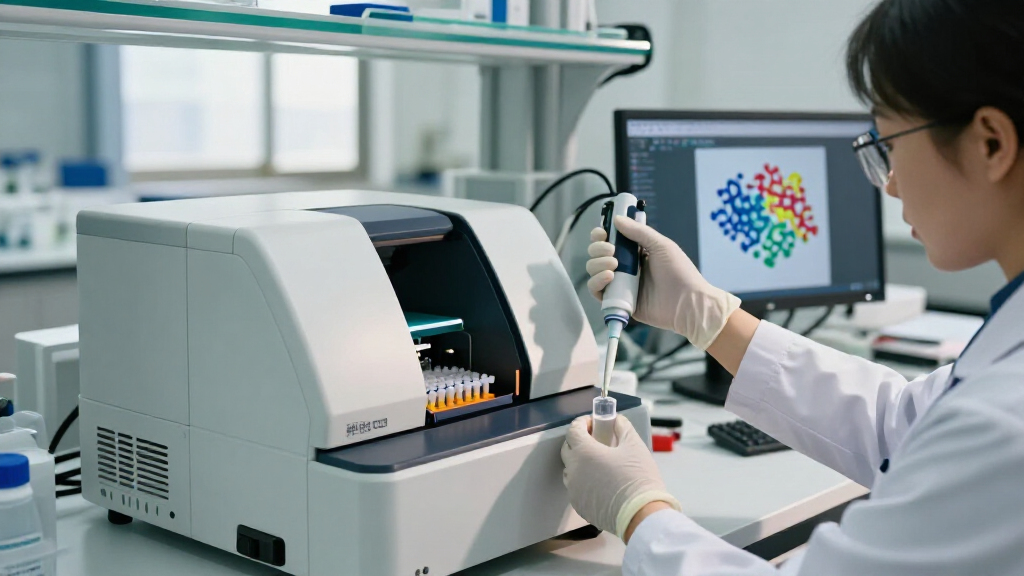
Randal Halfmann’s laboratory at the Stowers Institute for Medical Research in Kansas City is expected to receive about $4.1 million over two years to generate experimental data. The team plans to measure the aggregation tendencies of 50,000 proteins in yeast cells under a range of conditions designed to model cellular changes associated with aging. The project estimates that the work will cover more than one million samples and produce over 10 billion measurements.
The lab will use Distributed Amphifluoric FRET (DAmFRET), a method developed by Halfmann’s team in 2018 to measure protein self-assembly in individual living cells. The researchers will vary protein amino-acid sequences and examine whether proteins remain in their usual state or begin to aggregate. The resulting data are intended to help AI researchers identify patterns in proteins that can adopt many shapes.
NATIVE-ID is led by the Innovative Genomics Institute at the University of California, Berkeley and is part of ARPA-H’s BIOGAMI program. The collaboration also includes scientists from Brown University, Emory University, Johns Hopkins University, the Parallel Squared Technology Institute and Texas A&M University. According to the source report, partner teams will bring additional capabilities, including work with human neurons, where the model’s predictions will ultimately need to be tested.
Why Early Protein Signals Matter
Many neurodegenerative diseases are associated with proteins that change shape and aggregate, but the biological steps leading to harmful clumping can be difficult to detect. By the time researchers can clearly observe some changes, damage may already be underway. The project aims to study earlier events and assess whether patterns in protein sequences can help predict when dysfunction is more likely.
If the approach works, it could support research into risk timing and disease onset, and potentially help identify people for preventive or early-stage studies. Halfmann has said better predictions could give more people an opportunity to seek early-stage treatment or enroll in clinical trials. These are potential future applications; the work is at the data-generation and model-development stage.
The effort also addresses a limitation in current protein-prediction methods. While AI has made substantial progress predicting structures for many proteins, intrinsically disordered proteins, or IDPs, lack one stable structure and can shift among multiple forms. Some are involved in disease-associated aggregation. Providing models with extensive experimental measurements may help researchers study these proteins in ways that structure prediction alone cannot.
Products Worth Considering

Fitbit Inspire 3 Health and Fitness Tracker Bundle

Oral-B iO Series 3 Rechargeable Electric Toothbrush for Adults, Black

BowFlex Results Series SelectTech Dumbbells
As an affiliate, we earn on qualifying purchases.
From Yeast Experiments to Human Neurons
The project builds on earlier work from Halfmann’s laboratory. In 2023, the lab reported experimentally determining the structure of an initiating step in amyloid formation associated with Huntington’s disease. Halfmann has also described studies of TDP-43, a protein linked to ALS and FTLD, as pilot work for the larger project. He said the earlier studies examined hundreds of protein sequences; NATIVE-ID plans to expand that scale to 50,000.
The project will begin with FTLD, a disease that the source report says shares significant genetic and biological features with ALS. Its broader goal is to develop approaches that could be relevant to other disorders involving protein misfolding. Experiments in yeast can provide a controlled way to test many sequences, but they do not by themselves establish how a protein behaves in a person. The project’s human-neuron work is intended to help examine whether model predictions hold in a more disease-relevant setting.
“If we can better predict the probabilities and onset ages of disease, it could allow many more people to seek preventive or early-stage treatments or enroll in clinical trials.”
— Randal Halfmann, Stowers Institute investigator
How Well Predictions Will Translate
The announced plans describe a research effort, not a validated forecasting tool. It remains unclear how accurately an AI model can predict the onset or timing of disease, whether predictions from yeast experiments will hold in human neurons, and how results could eventually apply to individual patients. The source material does not specify when a model will be ready, what performance standard it must meet, or when clinical testing might begin.
The planned totals—50,000 proteins and more than 10 billion measurements—are project estimates. They do not show that the data have already been collected or that the resulting approach will lead to preventive treatments. The project’s initial focus is FTLD, so its relevance to other neurodegenerative diseases will also need to be established through further research.
Data Collection and Neuron Testing
Halfmann’s lab is expected to begin the two-year experimental program, testing protein sequences in yeast across varied conditions and generating measurements of aggregation. The wider NATIVE-ID team will use the data to develop AI models and examine whether their predictions hold in human neurons. The research is planned to start with FTLD-related questions while pursuing findings that may apply to other protein-misfolding diseases.
The next meaningful milestones will be evidence that the data set has been generated, that the model can make reproducible predictions, and that those predictions correspond with protein behavior in human cells. The source report does not provide a schedule for those results or for any clinical application.
Key Questions
What is the NATIVE-ID project?
NATIVE-ID is a multi-institutional research effort led by the Innovative Genomics Institute at UC Berkeley. It aims to collect data on protein aggregation and use the information to train AI models focused initially on FTLD.
What will Halfmann’s laboratory do?
The Stowers Institute team plans to study 50,000 proteins in yeast cells using DAmFRET, a method for measuring protein self-assembly in individual living cells. The lab is slated to receive about $4.1 million over two years for this work.
Will the project predict when a person will develop dementia or ALS?
That has not been demonstrated. The project aims to train models to identify patterns related to protein dysfunction; whether they can predict disease onset in people, and with what accuracy, remains unknown.
Why study proteins in yeast?
Yeast cells allow researchers to test many protein sequences under controlled conditions. The project plans to use human-neuron work to assess whether predictions based on those experiments hold in a more relevant cellular setting.
Which diseases are included in the project?
The initial focus is frontotemporal lobar degeneration, which shares genetic and biological features with ALS, according to the source report. The wider goal is to develop approaches that may apply to other diseases involving protein misfolding.
Source: rss