
TL;DR

Get health and wellness essentials delivered free with Prime
- Fast, free delivery on millions of items
- Prime Video, Amazon Music and more included
- Member-only deals all year
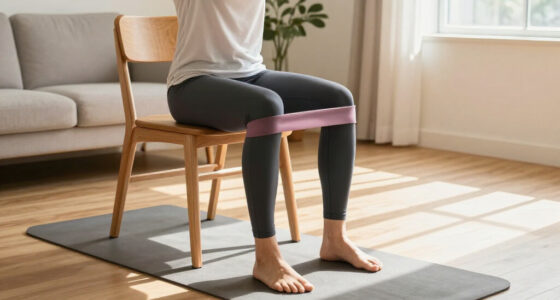
Fit&Well published a five-exercise resistance-band workout created by certified personal trainer Angela Wilkinson to train movement in several directions. The short circuit uses a mini band and a long band; the report recommends two sets and doing it two to three times a week, while noting safe band anchoring and controlled form.
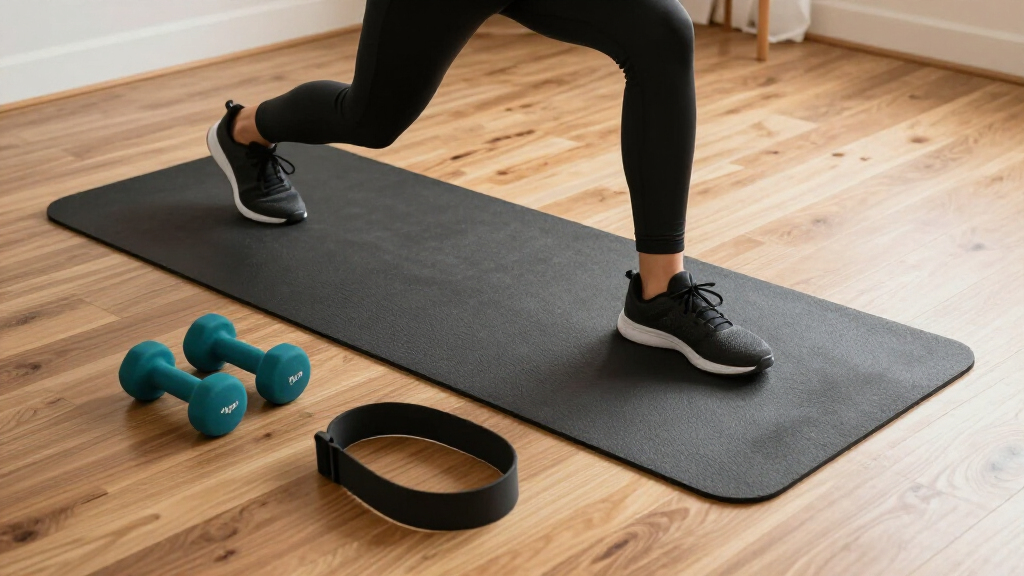
Fit&Well has published a five-move resistance-band circuit by certified personal trainer Angela Wilkinson, aimed at training rotational movement, side-to-side movement and single-leg control as well as forward-and-back strength. The routine uses a mini loop band and a long resistance band and is presented as a brief workout for building strength, balance and coordination.
Wilkinson’s circuit consists of a chest-height woodchop, mini-band knee drive, lateral band walk, standing hip circle and low-to-high woodchop. The movements work across different directions: the woodchops involve torso rotation, the band walk travels laterally, and the knee drive and hip circle challenge control while standing on one leg.
The report recommends performing the five exercises back-to-back, resting for two minutes, then completing a second set. Its overall suggested frequency is two to three sessions per week, and it estimates the circuit will take 10 to 15 minutes. Exercise-specific instructions generally call for eight repetitions per side, with the lateral walk performed for eight to 10 steps in each direction and the knee drive for 10 repetitions per side.
Wilkinson advises keeping each repetition controlled and allowing the feet to pivot during rotational exercises rather than forcing the movement through the arms or using momentum. The report also cautions that a resistance band must be attached to a fixed, load-bearing anchor, checked before use, and never secured to furniture that could slide or tip.
Training Beyond Straight-Line Motion
The workout addresses a gap Wilkinson identifies in some exercise plans: many movements are performed mainly forward and backward, while everyday tasks also involve reaching sideways, turning and stabilizing the body. Her point is that strength and control in more than one direction can be relevant to ordinary activities, not just sport-specific training.
The exercises offer a practical way to add those patterns to a short home session using basic resistance bands. That does not establish that this particular routine prevents injuries or improves performance for every person; the supplied report offers workout instructions and trainer commentary, not evidence from a clinical trial. Readers should treat the expected benefits as the trainer’s rationale for the movements, rather than a guaranteed outcome.
Products Worth Considering

Therabody Theragun Mini 3rd Generation Massage Gun, Black

Hyperice Normatec 3 Leg Compression Boots – Full Leg Recovery, Standard Size

Coway Mighty AP-1512HH(W) Air Purifier, White
As an affiliate, we earn on qualifying purchases.
The Five Movements and Their Purpose
Wilkinson says the circuit reflects how people turn, reach and regain balance during daily activity. She describes the chest-height woodchop as a way to train torso rotation, with the feet able to pivot slightly as the band is pulled across the body. The low-to-high version adds a diagonal lifting pattern, starting near one hip and finishing above the opposite shoulder.
The other three movements focus on different demands. A mini-band knee drive challenges the hip flexors and balance on the standing leg. The lateral band walk targets the muscles at the outer hip, while holding the band at waist height also asks the upper body to remain steady. The standing hip circle takes the moving leg through a curved path rather than a straight kickback. These descriptions and intended muscle demands are Wilkinson’s explanations in the Fit&Well report.
For the chest-height woodchop, the report specifies eight repetitions per side; for the low-to-high woodchop, it gives the same count. The hip circle is also listed at eight per side. The routine is designed around a mini loop and a long band, with the anchor position changed for the two woodchop variations.
“This trains rotational power through the torso at chest height, mimicking movements like swinging a bag round, turning to hand something to someone beside you, or twisting to reach across a car seat.”
— Angela Wilkinson, on the chest-height woodchop
Limits of the Workout Report
The supplied material does not give a publication date, research findings, or a comparison with other workout plans. It also does not report measured results showing that the circuit improves balance, coordination or strength, or that it reduces the risk of back strain. Wilkinson’s comments describe the intended training effects and practical analogies, but the source does not provide independent testing of those claims.
The report does not set out modifications for different fitness levels, injuries or medical conditions, nor does it specify band resistance. The appropriate resistance and suitability of the movements will vary by person. Anyone with a health concern or uncertainty about exercise should seek guidance from a qualified professional before starting.
How to Use the Circuit Safely
The source gives no announcement of a follow-up study or additional workout plan. For readers following the published routine, the immediate next step is to check that the bands and anchor are secure, choose a resistance that allows controlled movement, and follow the stated repetitions and rest period rather than rushing through the exercises.
Wilkinson’s suggested schedule is two to three sessions per week, with two sets of the circuit. The report does not say how soon a person should expect progress or prescribe a progression plan, so those outcomes remain individual rather than promised by the article.
Key Questions
What exercises are included in the workout?
The circuit includes a chest-height woodchop, mini-band knee drive, lateral band walk, standing hip circle and low-to-high woodchop. It uses a mini loop band and a long resistance band.
How many sets and how often does the report recommend?
Wilkinson recommends doing the five exercises in sequence, resting for two minutes, then completing a second set. The report suggests doing the circuit two to three times a week.
What safety precautions does the report give?
Attach the long band to a fixed, load-bearing point that can withstand the pull. Check that the band and anchor are secure, and do not use furniture that could slide or tip.
Does the source show that this routine prevents back injuries?
No. Wilkinson says the low-to-high woodchop trains a movement pattern that can be done carelessly, but the supplied report does not present research showing that the routine prevents back injuries.
Source: rss