
TL;DR
Prime for Young Adults — start your free trial
Fast free delivery, streaming and member deals for eligible 18–24 year olds.
Try it freeAs an affiliate, we earn on qualifying purchases.
Health headlines greatly influence public perception and decision-making. Misleading or sensational headlines can cause unnecessary anxiety or harmful choices. Understanding their true context helps you make smarter health decisions.
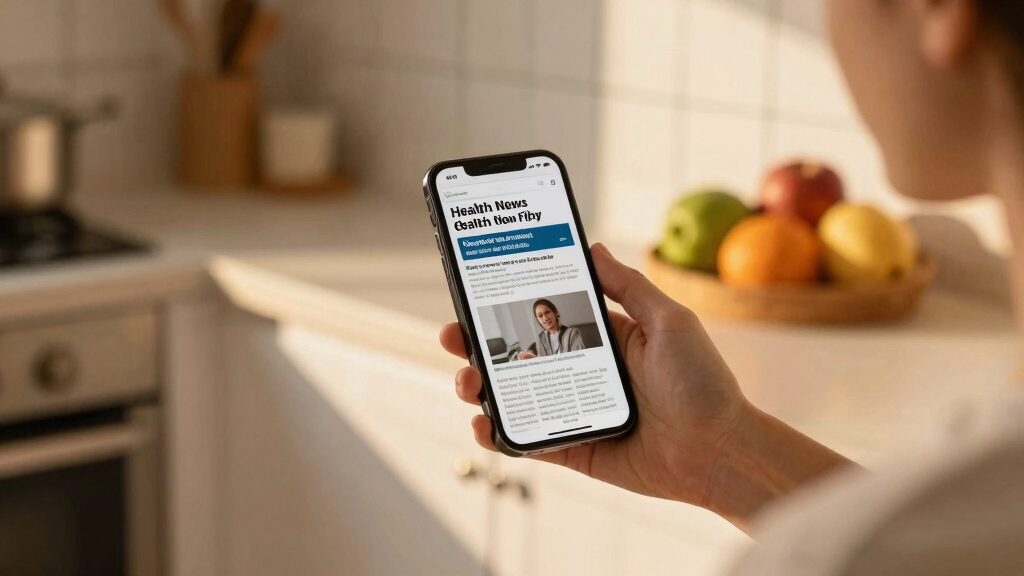
Ever read a headline about a new miracle cure or a shocking health risk? Chances are, you’ve been influenced by a snippet that simplifies or exaggerates the science behind it. The truth is, health headlines have a bigger impact on your perceptions and choices than most realize. They shape your beliefs about risks, treatments, and what’s safe or dangerous.
In this guide, you’ll discover why understanding these headlines matters — and how you can spot the real story behind the sensational. Because in today’s fast-moving media landscape, a clear, accurate perspective isn’t just helpful — it can protect your health and peace of mind.
Why Health Headlines Explained Matters More Than Most Readers Realize
Health headlines shape what people fear, trust, try, avoid, and repeat. A single oversimplified claim can turn nuanced science into panic, false hope, or risky decisions. Reading past the headline is not just a media habit; it is a practical layer of health protection.
Headlines grab attention. Context protects judgment.
Many people form a health impression before opening the article.
Complex studies become one sharp claim designed for quick reaction.
Fear, false hope, vaccine doubt, and poor treatment choices can follow.
Reliable sources and scientific backing help restore proportion.
Sensational language moves faster than careful reasoning.
Words like “miracle,” “instant,” “danger,” and “cure” trigger an emotional response before critical thinking catches up. That is why a headline such as “Sugar causes cancer” can feel decisive even when the underlying study only found a weak association.
Emotional salience
Your brain prioritizes vivid threats and promises, making dramatic claims easier to remember than cautious evidence.
Confirmation pull
If a headline matches an existing fear or belief, it feels more credible even before the details are checked.
Distorted risk
Panic and complacency are both possible when a headline strips away study limits, uncertainty, and context.
Shock phrase
A dramatic health claim interrupts normal scrolling.
Fast feeling
Fear, hope, anger, or relief arrives before scrutiny.
Sticky memory
The simplified claim becomes easier to recall than the article.
Health choice
A reader may avoid, buy, share, or worry based on incomplete data.
Context reset
Reading the study limits restores proportion and better judgment.
The same study can produce two very different stories.
Scientific findings often include percentages, uncertainty, sample limits, and conflicting evidence. Headlines tend to compress those details into a punchy claim, sometimes turning a modest signal into a sweeping promise or threat.
| Evidence-Based Headline | Sensational Version | What Changed | Reader Risk |
|---|---|---|---|
| ✓Moderate Exercise Improves Heart Health | !Exercise Cures Heart Disease Instantly! | Benefit became a guaranteed cure. | False confidence or abandoned medical advice. |
| ✓Eating Vegetables Linked to Lower Cancer Risk | !Eat Veggies, Avoid Cancer Forever! | Association became total prevention. | Misunderstanding prevention and risk reduction. |
| ~Study Finds Small Risk Increase from Coffee | !Coffee Causes Sudden Death! | A small statistical signal became a crisis. | Unnecessary anxiety and poor tradeoff thinking. |
Headline Sensationalism Spectrum
Most distortion happens in the gap between study nuance and headline simplicity.
A responsible headline does not need to include every statistical detail, but it should avoid inflating effect size, hiding uncertainty, or implying causation where the study only found correlation.
“Miracle cure” framing can push risky choices.
Readers may pursue unproven remedies, overestimate a treatment, or ignore safer options when preliminary evidence is presented as settled fact.
“Danger” framing can make helpful behaviors look unsafe.
A small or uncertain risk can be amplified until people avoid beneficial medicine, vaccination, nutrition, screening, or exercise.
Five moves that separate signal from hype.
The goal is not cynicism. The goal is calibrated trust: enough skepticism to avoid misinformation, and enough openness to learn from careful science communication.
Prefer reputable organizations, medical journals, public health agencies, and outlets with clear standards.
The article usually contains limits, caveats, expert reaction, and the real size of the finding.
Peer-reviewed evidence, study design, sample size, and methodology matter more than confident wording.
“Miracle,” “instant,” “cure,” and “danger” often signal attention tactics instead of balanced reporting.
If multiple trusted sources describe the finding similarly, the claim is more likely to be grounded.
Did the headline turn correlation into causation, a small risk into a crisis, or early evidence into certainty?
Responsible reporting protects peace of mind.
Better health journalism creates a healthier information loop: curiosity stays alive, fear stays proportionate, and decisions become easier to ground in evidence.
Frequently asked questions about health headlines.
How can I tell if a health headline is trustworthy?
Look for a reputable source, read the full article, check whether a peer-reviewed study is cited, and watch for exaggerated language.
Why do headlines exaggerate findings?
Headlines compete for attention. A catchy phrase can increase clicks, but it can also flatten complex science into a misleading claim.
What should I do when a headline sounds alarming?
Pause, verify with trusted sources, read the actual context, and consult a health professional before changing treatment or behavior.
How do I improve my health media literacy?
Learn common misinformation tactics, follow responsible health outlets, compare claims, and ask what the evidence actually shows.
Key Takeaways
- Always read beyond the headline; headlines are designed to grab attention, not inform.
- Learn to recognize sensational language that exaggerates findings or risks.
- Check the source and look for scientific backing before accepting a health claim.
- Understand that scientific studies are complex — headlines rarely tell the full story.
- Follow reputable health news outlets committed to responsible reporting.
Why Your Brain Latches Onto Sensational Headlines
When you see a bold claim like “Miracle cure found!” or “Vaccine causes harm!” your brain reacts quickly. It’s wired to pay attention to emotionally charged, attention-grabbing phrases. This is why sensational headlines stick with you long after you’ve scrolled past.
For example, a headline claiming “Sugar causes cancer” might lead you to cut out all sweets, even if the actual study only found a weak association. The headline’s vivid language triggers a quick emotional response, often bypassing your critical thinking.
This tendency means you’re more likely to accept a headline at face value, especially if it confirms your existing fears or beliefs. Recognizing this bias helps you pause and ask: ‘Is this headline telling the full story?’
Understanding why your brain is drawn to sensationalism is crucial because it reveals a natural bias that can distort your perception of risk. When you’re aware of this, you can develop habits—like reading beyond the headlines—that help you make more balanced, evidence-based decisions. Ignoring this bias might lead to unnecessary panic or complacency, both of which can have real health consequences.
How Headlines Can Distort Scientific Findings
Scientific studies are inherently complex. They involve statistical measures like percentages, confidence intervals, and often conflicting results from different research groups. Headlines tend to oversimplify or cherry-pick these details to create a compelling story, which can lead to misinterpretation.
For example, a study might find that a new drug reduces symptoms by 20%, with a wide confidence interval of 10-30%. A headline might then declare “New drug cuts symptoms in half!”—which is a gross exaggeration that can mislead readers into overestimating the drug’s effectiveness. Conversely, a small increase in risk might be spun as a dangerous threat, causing unnecessary fear.
The implications of these distortions are significant: they can influence public opinion, policy decisions, and personal health choices. If you believe a treatment is a miracle cure because of a sensational headline, you might pursue unproven remedies or ignore safer options. If you see a headline warning of a risk, you might avoid beneficial behaviors out of misplaced fear.
Recognizing this gap between scientific nuance and headline simplicity is vital. It encourages critical thinking—asking questions like: What exactly did the study find? What are the limitations? How does this fit into the broader scientific context? Only by understanding these tradeoffs can you avoid falling for misleading claims and make truly informed decisions about your health.
A Simple Table: Comparing Real and Fake Headlines
| Real Headline | Fake/Sensational Headline |
|---|---|
| “Moderate Exercise Improves Heart Health” | “Exercise Cures Heart Disease Instantly!” |
| “Eating Vegetables Linked to Lower Cancer Risk” | “Eat Veggies, Avoid Cancer Forever!” |
| “Study Finds Small Risk Increase from Coffee” | “Coffee Causes Sudden Death!” |
Understanding these differences is crucial because it shows how headlines can distort scientific evidence. Recognizing sensationalism helps you maintain a skeptical mindset, prompting you to seek out the full context and scientific data behind the claims. This awareness is a key step toward preventing misinformation from influencing your health choices and ensures you’re making decisions based on a comprehensive understanding rather than headlines alone.
How to Spot a Trustworthy Health Headline
- Check the source. Reputable outlets like the CDC, WHO, or major medical journals are more reliable because they adhere to rigorous standards of accuracy and peer review. Recognizing trustworthy sources helps you avoid sensationalized or biased information.
- Read beyond the headline. The full article often clarifies the real findings, limitations, and context, which are usually omitted in headlines designed for quick clicks. Developing this habit helps you understand the true significance of the research.
- Look for scientific backing. Does the headline cite a peer-reviewed study? Is the research methodology sound? This helps differentiate between credible science and mere speculation or hype.
- Beware of words like “miracle,” “instant,” “cure,” or “danger”—these are often used to sensationalize and attract attention rather than accurately describe the findings. Recognizing these cues allows you to approach claims more critically.
- Cross-check with other trusted sources before forming an opinion. If multiple reputable outlets report similar findings, it’s more likely to be accurate. Conversely, if a claim appears isolated or exaggerated, it warrants skepticism.
For example, if you see a headline claiming “Cancer cure discovered,” don’t accept it at face value. Instead, verify by reading the actual study, consulting medical professionals, or checking reputable health communication platforms. This diligence prevents you from falling prey to misinformation and helps ensure your health decisions are based on solid evidence.
Why Responsible Reporting Can Save Your Peace of Mind
Good science journalism balances curiosity with caution. Instead of sensationalizing, responsible reporting provides context, explains limitations, and clarifies what the findings really mean. This approach helps you interpret health news accurately, reducing unnecessary worry or complacency.
For instance, reputable news outlets might report on a new dietary supplement by explaining that the evidence is preliminary, potential side effects, and what experts recommend. This transparency allows you to weigh the risks and benefits more effectively, avoiding fear-based decisions rooted in incomplete information.
When headlines are responsible, they foster trust. Trust in accurate reporting leads to healthier choices because you’re basing decisions on full, balanced information rather than fear or hype. This trust also encourages a more informed public, which can influence better health policies and research funding, creating a positive feedback loop that benefits everyone.
Frequently Asked Questions
How can I tell if a health headline is trustworthy?
Look for sources from reputable organizations like the CDC or WHO. Read the full article to understand the context and check if the claim is backed by scientific studies. Be cautious of sensational words that exaggerate the findings.
Why do headlines often exaggerate or oversimplify findings?
Headlines are crafted to attract clicks and attention. Simplifying complex science into a catchy phrase boosts engagement but often distorts the actual findings, leading to misconceptions.
What should I do if I see a misleading health headline?
Verify the claim with trusted sources, read the full article, and consult healthcare professionals if necessary. Don’t rely solely on the headline for health decisions.
How can I improve my media literacy regarding health news?
Educate yourself about scientific principles, recognize common misinformation tactics, and follow reputable health news outlets. This helps you filter out false or exaggerated claims.
Are there tools or resources to help evaluate health headlines?
Yes, fact-checking websites, scientific literacy guides, and trusted health communication resources can help you assess the credibility of health headlines.
Conclusion
In a world of rapid-fire news, your best defense is a healthy dose of skepticism. Recognizing that headlines often distort the science empowers you to seek the real story. Think of it as a filter — only the informed can truly protect their peace of mind and well-being.
Next time you spot a shocking health headline, pause. Read the full article, verify the source, and remember: a true understanding takes more than just the headline.
NFL season / tailgating Picks
team gear
As an affiliate, we earn on qualifying purchases.