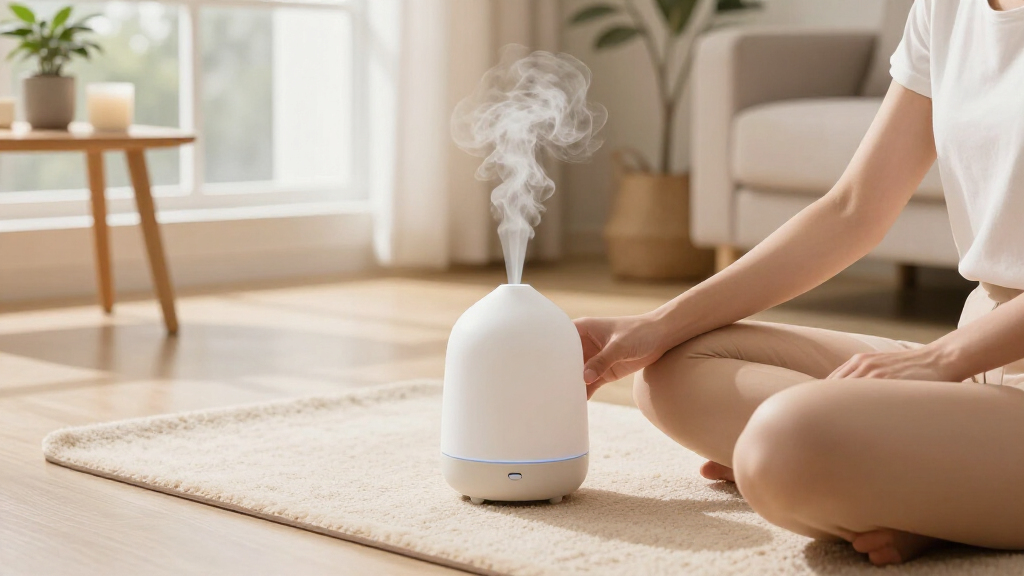

This guide provides clear instructions on using various meditation and relaxation tools to help you manage stress and enhance your mental well-being. Suitable for beginners, it details practical methods and tools you can incorporate into your daily routine to achieve calmness and focus in as little as 15 minutes.

Get health and wellness essentials delivered free — and shop member deals
- Fast, free delivery on millions of items
- Access to Prime Big Deal Days deals on October 6–7
- Prime Video, Amazon Music and more included

Mindsight Original Breathing Buddha Guided Visual Meditation
- ✔ Dimensions: 3.5 x 4 x 6 inches
- ✔ Battery Life: 2 months @ 10 min/day
- ✔ Brightness Levels: 2

YeeBeny Breathing Lamp Guided 3-Color Meditation for Stress Relief
- ✔ Switch Type: Breathing lamp
- ✔ Light Source Type: LED
- ✔ Power Source: Battery Powered

YeeBeny Guided Breathing Lamp with 3 Colors for Stress Relief and Meditation
- ✔ Colors: Blue, Green, Red
- ✔ Breathing cycle: 4s inhale, 7s hold, 8s exhale
- ✔ Material: Silicone
Difficulty: Beginner | Time: 15-30 minutes per session
What You’ll Need
Tools & Materials:
- Meditation cushion or chair
- Timer or clock
- Comfortable clothing
- Optional: Meditation app or guided recordings
Knowledge:
- Basic understanding of breathing techniques is helpful but not required
Choose a quiet, distraction-free space for best results. Consistency is key—try to set aside regular time for practice.
Mindsight Original Breathing Buddha Guided Visual Meditation
The Mindsight Original Breathing Buddha stands out for its simplicity and portability, making it an excellent choice for both kids and adults seeking a visual cue to calm the mind. Unlike other devices that incorporate sound or app connectivity, this option relies solely on visual prompts and adjustable brightness, which keeps it straightforward and distraction-free. Its long-lasting battery — lasting up to two months with just 10 minutes of daily use — is a significant advantage for those who want minimal maintenance. However, the lack of sound guidance or manual controls limits its flexibility for users who prefer more interactive or multi-sensory experiences. Compared with the YeeBeny models, it’s less customizable but excels in ease of use and battery longevity.
Pros:
- Portable and easy to use with visual guided breathing modes
- Long-lasting rechargeable battery (up to 2 months)
- Suitable for all ages and various environments
- No sound or moving parts for minimal distraction
Cons:
- No sound or audio guidance for meditation
- Limited to visual prompts without manual controls
- No app connectivity or advanced features
Best for: Those seeking a simple, portable device that promotes mindfulness without technological complexity
Not ideal for: Users who want sound-guided meditation or app integration for a more interactive experience
Bottom line: Ideal for users who want a straightforward, visual-only relaxation aid that’s portable and low-maintenance.
“Ideal for users who want a straightforward, visual-only relaxation aid that’s portable and low-maintenance.”
YeeBeny Breathing Lamp Guided 3-Color Meditation for Stress Relief
The YeeBeny Breathing Lamp offers a more sensory-rich experience with adjustable LED colors and timing, making it perfect for those wanting to tailor their relaxation routines. Its soft silicone build and gentle lighting create a calming environment, especially suited for bedrooms or sensory rooms. Unlike the Mindsight device, it provides visual cues with color changes rather than guided breathing cycles, which can be more engaging but less precise. Its reliance on batteries and absence of waterproofing mean it requires some care and maintenance. While it lacks advanced features like app control or sound, its simplicity and tactile design make it a thoughtful gift and a versatile relaxation tool. Compared with the YeeBeny Guided model, it’s less about guided breathing and more about creating a calming ambiance.
Pros:
- Guides mindful breathing with adjustable color and timing
- Made of soft silicone, suitable for sensory integration
- Helps reduce stress and anxiety effectively
- Ideal as a gift for loved ones
Cons:
- No waterproof feature, not suitable for humid environments
- Requires batteries, which need replacement
- Limited to basic lighting and breathing guidance functions
Best for: Individuals seeking a customizable, tactile visual aid to reduce stress and anxiety
Not ideal for: Users who prefer guided breathing cycles or interactive features beyond color adjustments
Bottom line: A calming, customizable visual aid best suited for those who enjoy tactile, color-based relaxation cues.
“A calming, customizable visual aid best suited for those who enjoy tactile, color-based relaxation cues.”
YeeBeny Guided Breathing Lamp with 3 Colors for Stress Relief and Meditation
This YeeBeny Guided Breathing Lamp combines the visual and interactive benefits of color modes with guided breathing cycles, making it suitable for a broad range of users. Its three color options—blue, green, and red—paired with adjustable breathing patterns, help users relax with personalized routines. While it offers a more structured approach compared to the basic YeeBeny model, its fixed breathing cycles (like 4s inhale, 7s hold, 8s exhale) may feel limiting for some. Its portability and simplicity make it accessible for use in various settings, but it lacks detailed technical specifications and advanced customization. It’s best for users who want a straightforward, guided visual meditation device without complex features or app integrations.
Pros:
- Helps reduce stress and anxiety through guided breathing
- Portable and easy to use anywhere
- Multiple color modes for personalized practice
- Simple, intuitive design suitable for all experience levels
Cons:
- Limited to three fixed breathing modes
- No detailed technical specifications provided
- Requires manual adjustment for different preferences
Best for: Users wanting a guided breathing device with multiple color modes for stress relief and meditation
Not ideal for: Those seeking extensive customization or app-controlled features
Bottom line: A versatile guided breathing lamp ideal for those who want straightforward, colorful visual meditation cues.
“A versatile guided breathing lamp ideal for those who want straightforward, colorful visual meditation cues.”
As an Amazon Associate we earn from qualifying purchases.
Before You Start
Ensure your environment is comfortable and free from interruptions. Wear loose, comfortable clothing. If using guided recordings, select a reliable app or audio source beforehand. Be aware that initial sessions may feel unfamiliar; persistence improves results.
Step-by-Step Instructions
Step 1: Set up your space and tools
Choose a quiet area where you won’t be disturbed. Sit comfortably on a cushion or chair, keeping your back straight but relaxed. Gather your timer and any guided recordings or apps you plan to use.
Tip: Use a cushion for floor sitting to improve posture and comfort. Dim the lights or close the curtains to create a calming environment.
Check: You feel settled and comfortable, with your environment set to promote focus and relaxation.
Step 2: Decide on your meditation method
Select a technique such as focused breathing, body scan, or guided meditation. If you are new, start with a simple breathing exercise or a short guided session.
Tip: Use guided recordings if you’re unsure of the technique; these can help keep your mind on track.
Check: You have a clear plan for your session and know which method you will follow.
Step 3: Begin with deep breathing
Close your eyes or soften your gaze. Inhale slowly through your nose for a count of four, feeling your abdomen rise. Hold your breath for a count of four. Exhale slowly through your mouth or nose for a count of six. Repeat this cycle for 3-5 minutes.
Tip: Focus on the sensation of your breath to anchor your attention. If your mind wanders, gently bring it back to your breath.
Check: Your breathing becomes steady, and your mind begins to settle into a calmer state.
Step 4: Use a guided meditation or relaxation tool
If you chose a guided meditation, play the recording. Follow the instructions, paying attention to your body, breath, or visualization cues. Keep your posture relaxed but alert.
Tip: Set the volume at a comfortable level. If your mind drifts, gently redirect it to the guided prompts or your breath.
Check: You remain engaged with the guidance, and your body relaxes as instructed.
Step 5: Practice progressive muscle relaxation
Starting from your toes, tense each muscle group tightly for 5 seconds, then release. Move upward through your legs, abdomen, chest, arms, neck, and face. Focus on the sensation of relaxation after each release.
Tip: Tense muscles gently; avoid overexertion. Maintain slow, controlled breathing throughout.
Check: Your muscles feel noticeably relaxed and loose, with a sense of calm spreading through your body.
Step 6: Conclude the session gradually
Slowly bring your awareness back to the present moment. Wiggle your fingers and toes, stretch gently if needed. Open your eyes slowly and sit quietly for a moment before resuming activity.
Tip: Avoid rushing to get up immediately; allow a few moments for grounding.
Check: You feel centered, relaxed, and ready to continue your day with a calmer mindset.
Common Mistakes to Avoid
- Trying to force the mind to be completely still — Accept that wandering thoughts are normal; gently redirect focus back to your breath or chosen anchor without judgment.
- Practicing for too long initially — Start with short sessions of 5-10 minutes and gradually increase as you become more comfortable.
- Being uncomfortable or distracted in the environment — Choose a quiet, comfortable space and eliminate distractions before starting.
Troubleshooting
Problem: Difficulty focusing or thoughts racing
Solution: Return your attention to your breathing or guided prompts. Keep your posture relaxed and avoid self-judgment.
Problem: Feeling restless or anxious during practice
Solution: Shorten your sessions or switch to a different technique like body scan or gentle stretching. Practice in a more comfortable environment.
Problem: Physical discomfort or pain
Solution: Adjust your seating position or use additional cushions. Stop if discomfort persists and try a different position or method.
What Success Looks Like
After completing your session, you should feel more relaxed, with a clearer mind and reduced tension. Your breathing will be steady, and you will notice a calmer emotional state. Consistent practice over time will deepen these effects.
Next Steps
Set a regular schedule, such as daily or several times weekly. Experiment with different tools and techniques to find what works best. Gradually extend session duration as comfort increases. Consider journaling your experience or tracking your mood to observe progress.
Frequently Asked Questions
How often should I practice meditation?
Start with 5-10 minutes daily. As you become more comfortable, increase to 15-30 minutes or more based on your schedule and needs.
Can I use my phone or device during meditation?
Yes, but ensure notifications are turned off to avoid interruptions. Use dedicated meditation apps or guided recordings for better focus.
What if I fall asleep during meditation?
It’s common, especially for beginners. To prevent this, sit upright and avoid practicing just before sleep. If you do fall asleep, simply note it and try again later with a different technique or time.
How long before I see benefits?
Many notice immediate calming effects after sessions, with more significant benefits like reduced stress and improved focus developing over weeks of consistent practice.
Fall Picks
fall essentials
As an affiliate, we earn on qualifying purchases.