
TL;DR

Get health and wellness essentials delivered free with Prime
- Fast, free delivery on millions of items
- Prime Video, Amazon Music and more included
- Member-only deals all year
Hawaii plans to begin a Medicaid Food Is Medicine program as soon as January, starting with nutrition education and food boxes for eligible patients. The initiative could reach more than 100,000 residents, but its rollout, local sourcing goals and health effects remain under development.
Hawaii expects to begin a Medicaid Food Is Medicine program as soon as January, offering nutrition education and food boxes to eligible patients with diet-related health needs. The federally funded initiative could reach more than 100,000 residents who qualify for Medicaid, though the state’s rollout is planned in phases and the exact services and eligibility details are still developing.
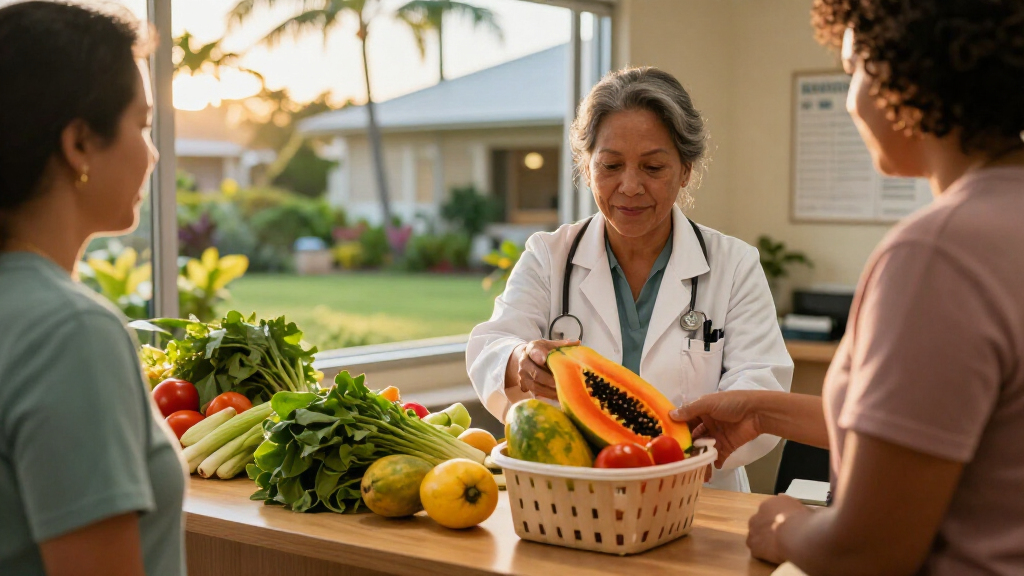
The program is being developed through a special state Medicaid initiative enabled by the Social Security Act’s Section 11-15 waiver, which allows experimental health programs under Medicaid. The first phase is expected to include nutrition education and prescription food boxes. Depending on the program, boxes may contain fresh produce and proteins such as fish, beef, chicken and eggs.
Hawaii health providers and advocacy groups have urged the program to source at least 15% of its produce and protein locally. That figure is an aspiration, not a binding requirement, according to Jordan Smith, Food Is Medicine program manager at the Hawaii Good Food Alliance, one of the initiative’s lead agencies. Smith said the plan remains a work in progress as health and food-system organizations develop ways to coordinate.
The initiative follows pilot programs that have provided food boxes to some participants. In one pilot, Big Island residents Moses and Suzette Paio received weekly produce and protein boxes for five months. MedpageToday reported that Suzette Paio’s average blood sugar halved and Moses Paio lost more than 70 pounds. Those are individual outcomes, not evidence that the program will produce the same results for other patients; researchers are still studying its effects.
Food Support Enters Medicaid Care
The initiative would make food access part of care for eligible Medicaid patients, rather than leaving households to manage diet-related health needs without help affording nutritious food. That matters in a state where one-third of households report limited access to safe, affordable and nutritious food, according to the source report. Food insecurity is also especially common among Native Hawaiians and Pacific Islanders, the report says.
The proposal also links health care spending with local agriculture. Advocates say buying from Hawaii growers and fishers could support the state’s food supply and farming sector. The source report describes the potential for millions of dollars in economic activity and nearly 1,000 jobs; those are projections, not confirmed outcomes of the program. The local sourcing aspiration may also be difficult to meet given the state’s reliance on food shipped from elsewhere.
Products Worth Considering

Fitbit Sense 2 Health and Fitness Smartwatch, Shadow Grey/Graphite

Levoit Core 400S-P Smart Air Purifier for Large Rooms

Garmin fenix 7X Pro Solar Multisport GPS Smartwatch with Built-in Flashlight – Black
As an affiliate, we earn on qualifying purchases.
From Pilot Boxes to Statewide Plans
Hawaii’s program has been in development for years and joins a growing group of states using Medicaid waiver authority to test nutrition-focused services. Under the plan described by MedpageToday, the first phase is expected to start in January, with the broader initiative rolling out in three phases. The report does not specify when the later phases will begin or what each will include.
Food insecurity and limited access to fresh food vary across the islands. The source report identifies Puna on the Big Island as a food desert, while West Oahu has had nutrition-focused health programs operating separately from the Medicaid initiative since 2017. Hawaii’s geography and exposure to natural disasters have also made reliable local food supply a longstanding concern.
The state’s pilot efforts are generating early observations, but research is ongoing. The University of Hawaii is conducting a five-year study of the program’s influence on hypertension at health centers on several islands. Assistant professor of nutrition Monica Esquivel, who leads the study, said more data will become available as the program develops.
Eligibility, Sourcing and Outcomes
The program’s start is described as expected as soon as January, but the source report does not provide a confirmed launch date, detailed eligibility rules, benefit amounts or a complete account of how patients will be referred. It is also unclear how many of the more than 100,000 potentially eligible Medicaid residents will participate.
The proposed local sourcing share is not mandatory, and the report does not say how the state will measure progress toward it. Researchers have not yet established the program’s overall effects on health or health-care costs. Pilot participants’ reported changes are encouraging examples, but they cannot establish what results the wider program will achieve.
January Launch and Research Milestones
The first expected step is the planned January start of nutrition education and prescription food boxes, followed by later phases whose timing and contents have not been detailed in the source report. State agencies and participating health and food organizations will need to set out how eligible patients can access the services and how food will be sourced and delivered.
More evidence is expected as pilot data are collected and the University of Hawaii continues its five-year hypertension study. Those findings may help clarify whether the approach improves health outcomes and how the program should develop, but they are not yet available.
Key Questions
When is Hawaii’s Food Is Medicine program expected to start?
The first phase is expected to begin as soon as January, with nutrition education and prescription food boxes. The source report does not give a specific launch date.
Who may qualify for the program?
The initiative is aimed at eligible Medicaid patients with diet-related health needs and could reach more than 100,000 Hawaii residents. Detailed eligibility and referral rules have not been provided in the source report.
What food could patients receive?
Food boxes may include fresh fruits and vegetables as well as proteins such as fish, beef, chicken and eggs. The exact contents and delivery arrangements may vary as the program is developed.
Will the food be locally grown or caught?
Advocates recommend that at least 15% of produce and protein come from local sources, but that is an aspiration rather than a binding requirement. The source report does not say how closely the program will meet that goal.
Has the program been shown to improve health?
Pilot participants have reported individual health changes, but the program’s overall effects are not yet established. A five-year University of Hawaii study is examining its influence on hypertension.
Source: medpagetoday.com