TL;DR

Get health and wellness essentials delivered free with Prime
- Fast, free delivery on millions of items
- Prime Video, Amazon Music and more included
- Member-only deals all year
Fit&Well reported that its 39-year-old writer used the Royal Osteoporosis Society’s free online bone-health checker and found that a fracture after a minor bump affected her risk assessment. The tool identifies factors that may warrant further discussion with a medical professional; it does not diagnose osteoporosis.
A free Royal Osteoporosis Society (ROS) online assessment prompted a Fit&Well writer to reconsider her osteoporosis risk after it flagged a broken bone from a minor bump as a factor for follow-up. The account illustrates how the checker can identify reasons to seek professional advice, but it does not establish a diagnosis.
The writer said she was 39, physically active and taking vitamin D supplements, and had expected her risk to be low. The assessment highlighted a fracture she experienced about five years earlier, when a collision with a fence during a five-a-side soccer game led to a spiral fracture of the fifth metacarpal in her hand. She said she needed hospital treatment and wore a cast for several weeks.
The article reports that the checker treats a prior fracture as a reason to consider discussing bone health with a doctor. ROS representative Julia Thomson cautioned that not every broken bone signals a bone-health problem. The circumstances of the injury matter, and a clinician can consider whether a fuller fracture-risk assessment or another action is appropriate.
The checker also asks about other possible risk factors, including age, menopause, low body mass index, family history of hip fracture, smoking, alcohol use and certain medical conditions. The article names overactive thyroid and coeliac disease as examples. These factors do not mean a person has osteoporosis; the tool is presented as a way to identify issues worth discussing with a health professional.
How a Past Fracture Changes Risk
Osteoporosis can weaken bones without causing obvious symptoms, so a risk assessment may give people a prompt to review factors they had not connected with bone health. The account’s central point is that a fracture after a relatively minor impact may be relevant, even when it happened years earlier, and should be interpreted in light of how it occurred.
The International Osteoporosis Foundation, as cited in the Fit&Well report, estimates that one in three women and one in five men over 50 will experience a fracture due to osteoporosis. That statistic refers specifically to people over 50 and to fractures attributed to osteoporosis; it is not an estimate of an individual’s personal risk. The checker may help users decide whether to ask for advice, but a medical professional must assess individual circumstances.
Products Worth Considering

Fitbit Inspire 3 Health and Fitness Tracker Bundle

Oral-B iO Series 3 Rechargeable Electric Toothbrush for Adults, Black

Fitbit Sense Health & Fitness Smartwatch (White/Gold, International Version)
As an affiliate, we earn on qualifying purchases.
What the Bone Checker Asks
The ROS tool is described as a free online risk assessment that asks users about personal and family health factors and can suggest whether they may benefit from in-person advice. The Fit&Well report says osteoporosis involves a gradual decline in bone mineral density and mass, which can leave bones more vulnerable to breaking. It is often called a “silent” condition because it may not cause pain or clear symptoms before a fracture.
According to the article, the checker explains that risk generally rises with age. It also notes that women may lose bone strength more quickly around menopause as oestrogen levels fall. Other factors it highlights include a BMI below 18.5, a parent who has broken a hip, smoking, drinking more than 14 units of alcohol a week, and some conditions that affect nutrient absorption or bone health. These are screening prompts, not proof that a user has the condition.
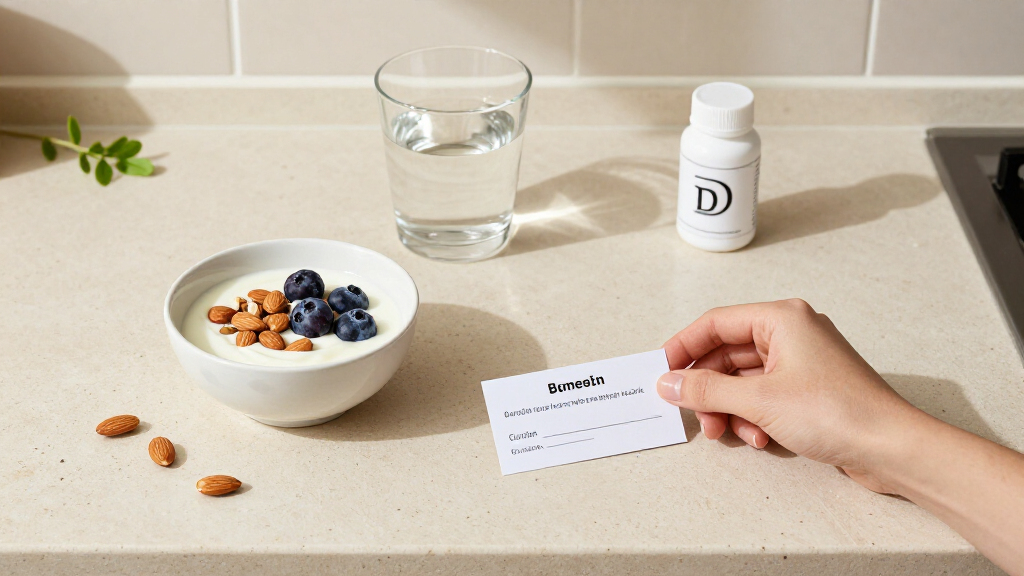
The article also discusses nutrition. Thomson says calcium supports bone strength and that the amount needed can vary with risk; the report gives 700 milligrams a day as a general figure and 1,000 milligrams for people at increased risk. It says many people can meet their needs through diet, while those who avoid dairy or follow a restricted diet may want to review their intake. The article also says people should consider vitamin D supplementation, particularly in certain circumstances; individual supplement decisions should be discussed with a qualified professional.
“You will be two or three times more likely to break another bone than someone who has never broken a bone.”
— Royal Osteoporosis Society bone-check tool, as quoted in Fit&Well
What the Quiz Cannot Determine
The report does not provide the checker’s full scoring method, validation details or a specific score for the writer. It also does not say that she received an osteoporosis diagnosis after completing it. The account describes a risk flag and possible next steps, not the result of a clinical assessment.
It remains unclear whether the writer sought medical advice or underwent further testing. A past fracture can have different explanations, and the source material does not establish that her hand fracture was caused by osteoporosis. Users should treat the online result as screening information, not a diagnosis or substitute for professional advice.
When to Seek Bone-Health Advice
The checker’s stated purpose is to help users judge whether they could benefit from speaking with a medical professional. Anyone whose answers raise questions—especially someone with a previous fracture or other listed risk factors—can discuss their history and possible next steps with a qualified clinician. That discussion can clarify whether further assessment is warranted.
The Fit&Well article encourages readers to use the ROS tool to review their risk. The source does not give a timetable for clinical follow-up or report changes to the tool, so its availability and any recommended next steps should be checked directly with the Royal Osteoporosis Society or a healthcare professional.
Key Questions
Does the ROS online checker diagnose osteoporosis?
No. It is described as a risk assessment that may suggest whether a person could benefit from professional advice. It does not confirm a diagnosis.
Does every broken bone mean someone has osteoporosis?
No. ROS representative Julia Thomson said not all broken bones indicate a bone-health problem. The circumstances of the fracture and a person’s overall history need to be considered.
Which risk factors does the article identify?
The report lists age, menopause, low BMI, a parent’s hip fracture, smoking, drinking more than 14 units of alcohol a week, and some health conditions, including overactive thyroid and coeliac disease. These factors do not by themselves establish that someone has osteoporosis.
What should someone do if the checker flags a risk?
Discuss the result and relevant medical history with a qualified healthcare professional. They can advise whether a fuller fracture-risk assessment or other action is appropriate.
Source: rss