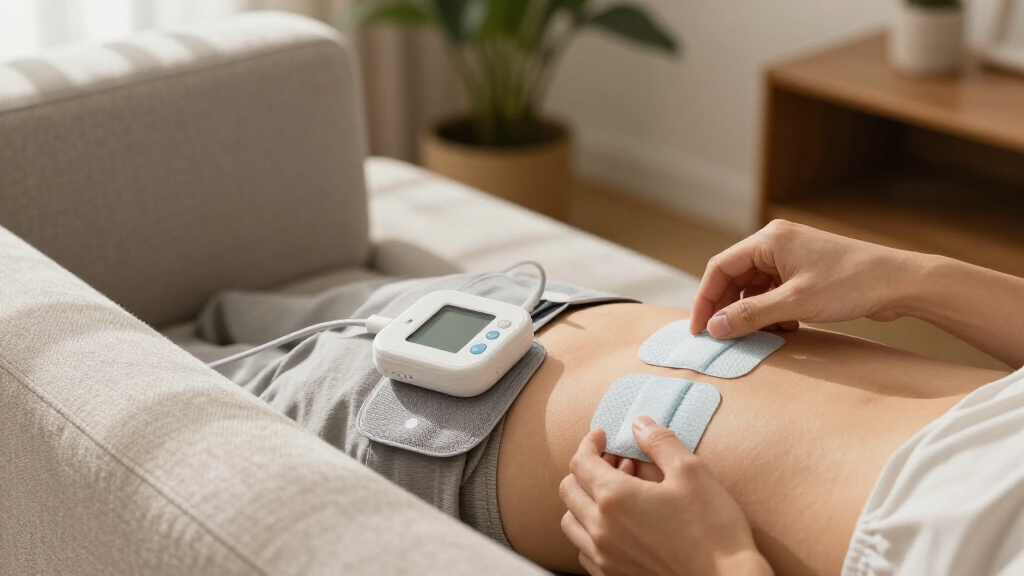

Choosing the right at home TENS therapy units can be overwhelming given the sheer volume of options available. My top recommendation for most users is the AUVON 3-in-1 TENS, EMS, and Relax Muscle Stimulator because it offers versatile pain relief and muscle stimulation in a single, easy-to-use device. For those prioritizing portability and freedom from cords, the Easy@Home Wireless TENS Unit with App Remote Control stands out as the best wireless option, allowing you to move freely while managing chronic pain. The main tradeoff in this category is between the raw power of traditional wired units and the convenience of modern wireless designs. Continue reading for a detailed breakdown of how these devices compare in intensity, ease of use, and long-term value.

Get health and wellness essentials delivered free with Prime
- Fast, free delivery on millions of items
- Prime Video, Amazon Music and more included
- Member-only deals all year
Key Takeaways
- Wired units like the TENS 7000 generally deliver higher maximum intensity levels than wireless counterparts, making them better for deep tissue pain.
- Wireless models such as the Easy@Home series require careful attention to battery life and charging habits, unlike the battery-agnostic wired options.
- App connectivity is a polarizing feature; while Easy@Home units offer modern control, many users find physical buttons on units like AUVON more intuitive during therapy.
- Electrode pad compatibility varies wildly; sticking with proprietary pads from major brands often ensures better long-term availability than generic universal pads.
- Dual-channel units allow for treating two separate areas of pain simultaneously, a feature standard on most mid-to-high-end models but absent in basic single-channel devices.
| AUVON 3-in-1 TENS, EMS, and Relax Muscle Stimulator |  | Best for Treatment Variety | Functions: TENS, EMS, and RELAX | Channels: Dual channel (A/B) | Preset modes: 24 | VIEW LATEST PRICE | See Our Full Breakdown |
| TENS 7000 Digital TENS Unit with Accessories |  | Best for Straightforward TENS Use | Model: TENS 7000 | Manufacturer: Roscoe Medical | Therapy: Multiple TENS therapy modes; modes not specified | VIEW LATEST PRICE | See Our Full Breakdown |
| AUVON Dual-Channel TENS Unit with 20 Modes and Electrode Pads |  | Best for Independent Channel Control | Channels: Dual | Preset modes: 20 | Channel controls: Separate mode and intensity settings for each channel | VIEW LATEST PRICE | See Our Full Breakdown |
| AVCOO 30 Modes TENS EMS Unit Muscle Stimulator for Pain Relief, 12 Pcs Pads |  | Best for Lightweight Travel | Functions: TENS and EMS | Channels: Dual channel | Modes: 30 | VIEW LATEST PRICE | See Our Full Breakdown |
| Easy@Home Wireless TENS Unit with App Remote Control |  | Best for Wire-Free App Control | Model: EHEO15BLE | Connectivity: Bluetooth | App compatibility: iOS and Android | VIEW LATEST PRICE | See Our Full Breakdown |
| Neocarbon TENS Unit Muscle Stimulator Pro for Pain Relief, Black |  | Best for Battery Longevity | Battery Life: Up to 50 hours | Charging Port: USB-C | Charge Time: 2 hours | VIEW LATEST PRICE | See Our Full Breakdown |
| Easy@Home Rechargeable Wireless TENS Unit and EMS Muscle Stimulator |  | Best for Simplicity | Design: Wireless and compact | Programs: 6 automated | Intensity Levels: 20 | VIEW LATEST PRICE | See Our Full Breakdown |
| AUVON Wireless TENS Unit Muscle Stimulator with 24 Modes and 6 Pads |  | Best for Versatility | Modes: 24 | Intensity Levels: 30 | Pad Sizes: Small and Large | VIEW LATEST PRICE | See Our Full Breakdown |
| Neocarbon TENS Unit Muscle Stimulator Pro |  | Best for Multi-Channel Therapy | Therapy Types: TENS and EMS | Modes: 36 | Intensity Levels: 20 per channel | VIEW LATEST PRICE | See Our Full Breakdown |
| Omron Max Power Relief TENS Unit Muscle Stimulator |  | Best for Established Brand Reliability | Model: PM500 | Therapy Modes: Pain and massage | Session Duration: 15 minutes | VIEW LATEST PRICE | See Our Full Breakdown |
| Comfytemp 3-in-1 Rechargeable TENS and EMS Muscle Stimulator |  | Best for Customization and Control | Therapies: TENS and EMS | Screen Size: 3-inch HD | Channels: 2 Independent | VIEW LATEST PRICE | See Our Full Breakdown |
| AUVON 24-Mode TENS Unit Muscle Stimulator |  | Best Balanced Preset Option | Modes: 24 Preset Modes | Battery Life: Up to 10 Hours | Recharge Time: Approx. 1 Hour | VIEW LATEST PRICE | See Our Full Breakdown |
| Carex Intensity at Home Dual-Channel TENS Unit |  | Best for Simplicity and Ease of Use | Channels: Dual Channel | Power Source: 4 AAA Batteries (Included) | Included Pads: 4 Reusable Gel Pads | VIEW LATEST PRICE | See Our Full Breakdown |
| Belifu Dual-Channel TENS EMS Unit with 24 Modes and 10 Reusable Pads |  | Best Value for Portability | Channels: 2 Independent | Modes: 24 Preset | Intensity Levels: 20 | VIEW LATEST PRICE | See Our Full Breakdown |
| at home TENS therapy unit | Intensity levels | Included pads |
|---|---|---|
| AUVON 3-in-1 TENS | 40 | 8 square 2-inch pads and 4 rectangular 2 x 4-inch pads |
| TENS 7000 Digital TENS Unit wi | — | — |
| AUVON Dual-Channel TENS Unit w | — | — |
| AVCOO 30 Modes TENS EMS Unit M | 30 | — |
| Easy@Home Wireless TENS Unit w | — | — |
| Neocarbon TENS Unit Muscle Sti | — | 12 |
| Easy@Home Rechargeable Wireles | 20 | — |
| AUVON Wireless TENS Unit Muscl | 30 | — |
| Neocarbon TENS Unit Muscle Sti | 20 per channel | 12 reusable square pads |
| Omron Max Power Relief TENS Un | — | — |
| Comfytemp 3-in-1 Rechargeable | 20 | 10 Reusable PET Pads |
| AUVON 24-Mode TENS Unit Muscle | — | 8 Reusable Square Pads |
| Carex Intensity at Home Dual-C | — | 4 Reusable Gel Pads |
| Belifu Dual-Channel TENS EMS U | 20 | 10 Reusable Adhesive Pads |
More Details on Our Top Picks
AUVON 3-in-1 TENS, EMS, and Relax Muscle Stimulator
I’d choose this AUVON when a home unit needs to do more than deliver TENS stimulation: it adds EMS and relaxation modes, alongside 24 presets and 40 intensity levels. That range gives buyers more ways to tailor a session than the TENS 7000, whose supplied description does not identify its therapy modes. Dual channels can run two or four pads, making it easier to cover more than one area in a session. The tradeoff is that the 90-minute treatment limit is shorter than a device intended for longer uninterrupted use, and the included pads are specified for up to 45 uses. I’d favor it over the simpler AUVON Dual-Channel TENS Unit when EMS and relaxation functions matter, but skip it if straightforward TENS controls are all you need.
Pros:- Combines TENS, EMS, and relaxation functions in one unit.
- 40 intensity levels and 24 presets allow adjustment across treatment sessions.
- Dual channels support two or four pads at the same time.
- Includes multiple pad sizes, lead wires, a storage pouch, and a USB-C cable.
Cons:- Treatment time is capped at 90 minutes.
- Pads are specified for up to 45 uses, so they will need replacement with regular use.
Best for: People at home who want TENS, EMS, and relaxation functions in one dual-channel device, with several preset choices.
Not ideal for: Buyers who want sessions longer than 90 minutes or prefer a basic TENS-only unit with fewer functions to sort through.
- Functions:TENS, EMS, and RELAX
- Channels:Dual channel (A/B)
- Preset modes:24
- Intensity levels:40
- Treatment time:Adjustable up to 90 minutes
- Included pads:8 square 2-inch pads and 4 rectangular 2 x 4-inch pads
- Pad adhesive:US gel; reusable for up to 45 uses
- Charging:Type-C cable included
- Warranty:24 months
Our verdict“Choose this AUVON if you want broad TENS and EMS options in one home unit and can work within its 90-minute session limit.”
TENS 7000 Digital TENS Unit with Accessories
The TENS 7000 makes the most sense for someone who wants a dedicated TENS unit with essential accessories already in the case. It includes two lead wires and four reusable pads, plus an included 9V battery, so there is no need to assemble a starter kit separately. Compared with the AUVON 3-in-1, it has a simpler stated purpose: the available product details describe multiple TENS modes, not EMS or relaxation functions. That narrower scope may suit buyers who do not need muscle-stimulation options, but the description does not name the modes or give intensity, timing, or channel specifications. I’d rank it below the more fully specified dual-channel choices for buyers who want to compare settings before purchasing. The hard case helps keep the accessories together, though battery operation means replacements are part of upkeep.
Pros:- Includes two lead wires and four reusable electrode pads.
- Comes with an included 9V battery for battery-powered operation.
- Hard carrying case keeps the unit and accessories together.
- Multiple TENS therapy modes are described for use across different areas.
Cons:- Requires a 9V battery, which will need replacing.
- The product details do not specify the therapy modes.
- Channel count, intensity range, and treatment-time settings are not provided.
Best for: Buyers seeking a basic TENS-focused setup with lead wires, reusable pads, a battery, and a hard carrying case included.
Not ideal for: Shoppers who want clearly listed modes, rechargeable power, EMS functionality, or detailed channel and intensity controls.
- Model:TENS 7000
- Manufacturer:Roscoe Medical
- Therapy:Multiple TENS therapy modes; modes not specified
- Battery:One included 9V battery
- Included lead wires:Two
- Included electrode pads:Four reusable pads
- Included case:Hard carrying case
- Dimensions:8.75 x 2 x 7.75 inches
- Item weight:13.7 ounces
Our verdict“Pick the TENS 7000 for a TENS-focused starter set with a case, but choose the AUVON models if you need clearer control details or EMS.”
AUVON Dual-Channel TENS Unit with 20 Modes and Electrode Pads
This AUVON is a good fit when treating two areas calls for separate mode and intensity settings on each channel. That control is its clearest distinction from the TENS 7000, whose supplied details do not specify channel controls, and it keeps the device focused on TENS rather than adding EMS. The 20 presets provide variety without the 24 modes and three-function menu of the AUVON 3-in-1. USB charging also avoids the TENS 7000’s included-but-replaceable 9V battery. The supplied pads come in square and rectangular sizes for different treatment areas, though they are rated for up to 45 uses. I’d choose this model for buyers who value independent settings and a rechargeable setup; those wanting EMS or relaxation functions should look at the 3-in-1 instead.
Pros:- Independent mode and intensity controls for each channel.
- 20 preset modes provide several TENS settings.
- USB-rechargeable power avoids routine 9V battery replacement.
- Includes square and rectangular pads for different treatment areas.
Cons:- Pads are specified for up to 45 uses.
- Does not include EMS or relaxation functions.
- The supplied description advises some people with medical conditions to consult a doctor before use.
Best for: People who want a rechargeable TENS unit for two treatment areas and need independent mode and intensity adjustments per channel.
Not ideal for: Buyers seeking EMS or relaxation modes, or anyone who wants pads rated for substantially more than 45 uses.
- Channels:Dual
- Preset modes:20
- Channel controls:Separate mode and intensity settings for each channel
- Power:Rechargeable via USB
- Electrode pad sizes:2-inch square and 2 x 4-inch rectangular
- Pad use:Up to 45 uses
- Included accessories:Lead wires, USB cable, user manual, pad holder, and pouch
- Warranty:24 months
Our verdict“Choose this AUVON for rechargeable, dual-area TENS sessions with independent channel settings, not for EMS or relaxation features.”
AVCOO 30 Modes TENS EMS Unit Muscle Stimulator for Pain Relief, 12 Pcs Pads
At 0.09 lb, the AVCOO is the lineup’s clearest choice for someone who wants a TENS and EMS unit that is easy to carry between home and travel. It pairs that small format with 30 modes, 30 intensity levels, and a stated battery life of up to 30 hours—more operating time than the AUVON 3-in-1 lists for a single adjustable treatment, although the AUVON also adds relaxation functionality and more intensity levels. The 12 included pads in multiple sizes give buyers flexibility for placement. Its compromise is that the product details do not describe channel-specific controls or a treatment timer, so buyers who prioritize those settings may prefer the AUVON Dual-Channel TENS Unit. Pad life is another ongoing consideration: these are reusable, but may need replacement after about 50 uses.
Pros:- Very light at 0.09 lb and compact at 4.8 x 1.3 x 0.5 inches.
- Combines TENS and EMS with 30 modes and 30 intensity levels.
- Stated battery life is up to 30 hours of usage.
- Includes 12 latex-free, medical-grade gel pads in multiple sizes.
Cons:- Pads may need replacement after about 50 uses.
- The supplied details do not specify channel-by-channel controls.
- A treatment-time range is not listed.
Best for: Travelers who want a very light dual-function TENS and EMS unit with a long stated operating time and several pad sizes.
Not ideal for: Buyers who need clearly documented independent channel settings or a specified session timer.
- Functions:TENS and EMS
- Channels:Dual channel
- Modes:30
- Intensity levels:30
- Battery life:Up to 30 hours of usage
- Weight:0.09 lb
- Dimensions:4.8 x 1.3 x 0.5 inches
- Pads:12 reusable, latex-free medical-grade gel pads in multiple sizes
- Certifications:CE, RoHS, FDA
Our verdict“Choose the AVCOO if portability and a long stated battery life matter more than detailed channel and timer specifications.”
Easy@Home Wireless TENS Unit with App Remote Control
The Easy@Home stands apart from the wired AUVON Dual-Channel TENS Unit by putting wireless operation and app control at the center of its design. Bluetooth connects the device to the MyPainOff app on iOS or Android, while physical buttons provide an alternative for basic control. That combination suits people who want fewer lead wires around their body without relying entirely on a phone. It offers both TENS and EMS pulse modes for temporary relief of sore or aching muscles and muscle stimulation, but the supplied details do not state a mode count, intensity range, treatment timer, or battery life. Unlike the AVCOO, which lists specific mode and intensity totals, this model leaves more practical settings unclear. It also still needs snap-on electrode pads, so wireless does not mean pad-free.
Pros:- Wireless design avoids tangled electrode lead wires.
- Supports both app and physical-button controls.
- Compatible with the MyPainOff app on iOS and Android.
- Offers both TENS and EMS pulse modes in a compact device.
Cons:- App control requires a compatible smartphone.
- Electrode pads with snap-on connectors are still required.
- Mode count, intensity range, treatment time, and battery life are not specified.
Best for: People who want a compact, wire-free TENS and EMS device and are comfortable using a smartphone app or physical buttons.
Not ideal for: Buyers who do not have a compatible iOS or Android phone and want detailed mode, intensity, or battery specifications before choosing.
- Model:EHEO15BLE
- Connectivity:Bluetooth
- App compatibility:iOS and Android
- App:MyPainOff
- Functions:TENS and EMS
- Controls:Smartphone app and physical buttons
- Pad attachment:Two snap-on connectors for electrode pads
Our verdict“Choose the Easy@Home for wire-free wear and app-or-button control, but opt for the AVCOO if published mode and intensity counts matter more.”
Neocarbon TENS Unit Muscle Stimulator Pro for Pain Relief, Black
This unit stands out for its exceptional battery life, delivering up to 50 hours of use per charge. For users who dislike frequent charging, this is a significant advantage over the AUVON Wireless TENS Unit, which offers only about 8 hours of pod runtime. The USB-C charging port ensures quick top-ups, taking just two hours for a full charge, making it convenient for daily users. While it lacks the wireless freedom of some competitors, its wired design often provides more consistent signal strength. It includes 12 electrode pads and a travel case, making it a solid choice for those who prioritize endurance and portability over sleek, cable-free aesthetics.
Pros:- Up to 50 hours of battery life per charge
- Fast USB-C charging in just 2 hours
- Includes 12 electrode pads and a travel case
Cons:- Wired design may be less discreet than wireless models
- Electrical pulses may cause discomfort for sensitive users
Best for: Users who travel frequently or dislike charging devices often and need long-lasting battery performance.
Not ideal for: Those who prefer completely wireless, discreet devices that can be worn under clothing without wires.
- Battery Life:Up to 50 hours
- Charging Port:USB-C
- Charge Time:2 hours
- Included Pads:12
- Display:Backlit LCD
- Accessories:Pad holders, travel case
Our verdict“Choose this if you want a reliable, long-lasting wired TENS unit with minimal charging interruptions.”
Easy@Home Rechargeable Wireless TENS Unit and EMS Muscle Stimulator
The Easy@Home Wireless TENS Unit is designed for users who value straightforward operation over complex settings. With just two buttons and six automated programs, it avoids the feature overload found in the AUVON Wireless TENS Unit with 24 Modes. This simplicity makes it ideal for beginners or older adults who may find multi-channel devices confusing. However, the two-button control scheme can feel limiting for advanced users who want granular intensity adjustments across multiple channels simultaneously. It is compact and discreet, fitting easily under clothing, but requires firm pad contact for effective therapy.
Pros:- Simple two-button control scheme
- Wireless and compact design for discreet use
- Six automated programs cover common pain types
Cons:- Limited control granularity compared to multi-button units
- Requires firm skin contact for optimal performance
Best for: Beginners or those who prefer a simple, no-nonsense interface with minimal setup requirements.
Not ideal for: Power users who need multiple independent channels or extensive customization options for different body parts.
- Design:Wireless and compact
- Programs:6 automated
- Intensity Levels:20
- Controls:Two-button
- Max Cycle:60 minutes
- Safety Clearance:510(k) cleared
Our verdict“This is the best choice for those who want effective pain relief without navigating complex menus.”
AUVON Wireless TENS Unit Muscle Stimulator with 24 Modes and 6 Pads
This model offers the widest range of options in this group, featuring 24 modes and 30 intensity levels. It is a direct competitor to the Easy@Home unit but caters to users who want to experiment with different pulse patterns and strengths. The inclusion of six latex-free pads in two sizes allows for targeted therapy on both small joints and large muscle groups. The charging case is a convenient touch, though the 8-hour pod runtime is significantly shorter than the Neocarbon Pro‘s 50 hours. It is best suited for those who treat various types of pain regularly and appreciate having many preset options.
Pros:- 24 modes and 30 intensity levels for customization
- Includes two pad sizes for targeted therapy
- Portable charging case for easy storage
Cons:- Shorter battery life (8 hours) compared to competitors
- Pads have a limited lifespan of up to 45 uses
Best for: Experienced users who treat different types of pain and want access to a wide variety of modes and intensities.
Not ideal for: Users who prioritize battery life or need a device that can last several days without recharging.
- Modes:24
- Intensity Levels:30
- Pad Sizes:Small and Large
- Pod Runtime:Up to 8 hours
- Session Timer:10–90 minutes
- Charging Port:USB Type-C
Our verdict“Ideal for those who want maximum flexibility in treatment modes and don’t mind charging more frequently.”
Neocarbon TENS Unit Muscle Stimulator Pro
Distinct from its sibling, the Black model, this Neocarbon Pro variant emphasizes its 36 modes and dual-channel capability with 20 intensity levels per channel. This allows for treating two different body areas simultaneously with varying intensities, a feature the single-channel Easy@Home lacks. It shares the impressive 50-hour battery life and USB-C charging of the Black model, making it equally reliable for long-term use. The inclusion of 12 reusable pads ensures you have plenty of supplies to start. It is a robust choice for those who need to manage pain in multiple locations at once without compromising on battery endurance.
Pros:- Dual-channel with 20 intensity levels per channel
- 36 modes for diverse therapy options
- 50-hour battery life with fast USB-C charging
Cons:- Bulky compared to wireless pod-style units
- Requires managing cables for dual-channel use
Best for: Users who need to treat multiple body areas simultaneously with independent intensity controls.
Not ideal for: Those who only need to treat one small area and prefer a simpler, single-channel device.
- Therapy Types:TENS and EMS
- Modes:36
- Intensity Levels:20 per channel
- Battery Life:Up to 50 hours
- Charging:USB-C, 2-hour charge
- Included Pads:12 reusable square pads
Our verdict“A strong contender for users needing independent control over multiple treatment zones with long battery life.”
Omron Max Power Relief TENS Unit Muscle Stimulator
The Omron Max Power Relief leverages the brand’s long-standing reputation for medical devices. Unlike the AUVON and Neocarbon models, it uses standard AAA batteries, which can be advantageous for users who lack access to charging outlets or prefer replaceable power sources. The therapy is strictly limited to 30 minutes per day, a conservative approach that prioritizes safety over aggressive treatment. While it offers fewer modes than the Easy@Home, its intuitive interface and washable pads appeal to those who want a proven, no-frills solution. It is less portable than the wireless units but offers a familiar, trusted user experience.
Pros:- Trusted brand with a long history in home health
- Washable pads extend accessory life
- Uses standard AAA batteries for easy replacement
Cons:- Strict 30-minute daily therapy limit
- Fewer modes and less customization than newer models
Best for: Users who trust established medical brands and prefer battery-operated devices over rechargeable ones.
Not ideal for: Those seeking high-intensity, long-duration sessions or modern wireless convenience.
- Model:PM500
- Therapy Modes:Pain and massage
- Session Duration:15 minutes
- Max Daily Therapy:30 minutes
- Power Source:2 AAA batteries
- Pad Reuse:Up to 150 uses
Our verdict“A reliable, conservative choice for those who prioritize brand trust and battery flexibility over advanced features.”
Comfytemp 3-in-1 Rechargeable TENS and EMS Muscle Stimulator
This unit stands out for users who want granular control over their therapy sessions rather than relying on preset programs. Unlike the simpler Carex Intensity, which offers fixed programs, the Comfytemp allows you to adjust frequency, pulse width, and on/off times independently. This flexibility means you can fine-tune sensations for specific nerve pathways or muscle groups. The 3-inch HD screen makes navigating these settings easier than on smaller, button-heavy devices. With 20 intensity levels and dual channels, you can treat two areas simultaneously with different settings. The main tradeoff is the learning curve; if you want a plug-and-play experience, the advanced menu system might feel overwhelming compared to more basic models.Pros:- Allows manual adjustment of frequency and pulse width for precise control
- Large 3-inch screen simplifies viewing settings during use
- Long battery life supports multiple sessions between charges
- Includes 10 reusable pads, reducing immediate accessory costs
Cons:- Complex menu system may confuse first-time users
- Charging time is not explicitly stated, making planning difficult
Best for: Tech-savvy users who want to customize frequency and pulse width for specific pain types
Not ideal for: Beginners who prefer simple, one-button operation and fixed preset programs
- Therapies:TENS and EMS
- Screen Size:3-inch HD
- Channels:2 Independent
- Modes:20 Total (including DIY)
- Intensity Levels:20
- Battery Life:Up to 21 hours
- Included Pads:10 Reusable PET Pads
- Timer Range:10–60 Minutes
Our verdict“Choose this if you want to tailor your TENS settings precisely rather than relying on presets.”
AUVON 24-Mode TENS Unit Muscle Stimulator
The AUVON 24-Mode unit strikes a strong balance between variety and simplicity. It offers 24 preset modes across six massage types, providing more options than the Carex Intensity without requiring the manual tweaking found in the Comfytemp. The fast 1-hour recharge time is a significant advantage, ensuring the device is ready for use quickly, unlike models with longer charge cycles. It includes eight reusable pads, which is a decent starting kit, though they have a shorter lifespan than the Comfytemp’s pads. This model is ideal for users who want reliable, varied stimulation without the complexity of custom programming. However, the shorter battery life of 10 hours means you may need to charge it more frequently if you use it daily.Pros:- 24 preset modes cover a wide range of massage sensations
- Fast 1-hour recharge time minimizes downtime
- Includes 8 reusable pads and a carrying pouch
- 12-month warranty provides peace of mind
Cons:- Battery life is shorter at 10 hours compared to rivals
- Pads last approximately 45 uses, requiring more frequent replacement
Best for: Users who want a wide variety of preset modes without manual customization
Not ideal for: People with pacemakers, epilepsy, or those who are pregnant
- Modes:24 Preset Modes
- Battery Life:Up to 10 Hours
- Recharge Time:Approx. 1 Hour
- Included Pads:8 Reusable Square Pads
- Pad Lifespan:Up to 45 Uses
- Warranty:12 Months
- Included Accessories:2 Lead Wires, Holder, Pouch
Our verdict“A solid middle-ground choice for those who want many preset options and fast charging.”
Carex Intensity at Home Dual-Channel TENS Unit
If you find modern digital interfaces intimidating, the Carex Intensity offers a straightforward, analog-style experience. It features large buttons and a clear display, making it easier to operate than the menu-heavy Comfytemp. The unit comes with four AAA batteries, allowing you to start immediately without hunting for a charger, unlike the rechargeable AUVON 24-Mode. While it lacks the extensive mode count of other devices, its preset programs for specific body areas like the back and neck are designed for quick, targeted relief. The tradeoff is the lack of advanced customization; you cannot adjust pulse width or frequency. This is a utility-focused device for those who want to place pads, press a button, and feel relief without navigating complex settings.Pros:- Large, easy-to-read buttons and display
- Comes with AAA batteries for immediate use
- Preset programs target specific body areas
- Lightweight and compact design
Cons:- No rechargeable battery; requires ongoing battery purchases
- Limited to 4 pads, which may not last long with frequent use
Best for: Older adults or beginners who prioritize large buttons and simple operation
Not ideal for: Users who want to customize pulse width or frequency settings
- Channels:Dual Channel
- Power Source:4 AAA Batteries (Included)
- Included Pads:4 Reusable Gel Pads
- Item Weight:3.5 Ounces
- Programs:Preset Body Areas
- Manufacturer:Roscoe Medical
Our verdict“The best choice for users who want a no-nonsense, easy-to-operate TENS unit.”
Belifu Dual-Channel TENS EMS Unit with 24 Modes and 10 Reusable Pads
The Belifu unit competes closely with the AUVON 24-Mode but differentiates itself with its USB charging compatibility. You can charge it via a wall adapter, power bank, or laptop, making it exceptionally convenient for travel or office use. It includes 10 reusable pads, doubling the pad count of the AUVON, which lowers long-term accessory costs. The separate intensity controls for each channel allow you to treat asymmetrical pain effectively. However, the 50-use estimate for pads is modest, and the lack of a clear brand reputation compared to AUVON or Carex might make some buyers hesitant. It is a practical, no-frills option that prioritizes functional portability and included accessories over brand prestige.Pros:- USB charging works with power banks and laptops
- Includes 10 reusable pads for extended use
- Separate intensity controls for left/right channels
- Includes storage bag and cable ties
Cons:- Pads estimated to last only 50 uses
- Less brand recognition compared to AUVON or Carex
Best for: Travelers and commuters who need a USB-chargeable device with extra pads
Not ideal for: Users who prefer established brand names with extensive support networks
- Channels:2 Independent
- Modes:24 Preset
- Intensity Levels:20
- Power Source:Rechargeable Lithium
- Charging Type:USB (Wall, Power Bank, Laptop)
- Included Pads:10 Reusable Adhesive Pads
- Pad Lifespan:Up to 50 Uses
Our verdict“A practical, portable option with generous pad inclusion and flexible charging options.”

How We Picked
I evaluated these fourteen devices based on three primary pillars: intensity range, ease of use, and build quality. Intensity is the most critical metric for pain relief; a unit that feels powerful in a review video but lacks the milliwatt output to penetrate deep muscle tissue is useless for chronic conditions. I prioritized units with clear, linear intensity adjustments rather than those with erratic power spikes. Ease of use was assessed by looking at control layout, screen readability, and the learning curve for electrode placement. Wireless models were judged on their pairing stability and battery longevity, as frequent recharging can disrupt therapy consistency.
The ranking logic favors versatility and reliability. Products that combine TENS (pain relief) with EMS (muscle stimulation) received a boost because they offer broader utility for the same footprint. I also weighed the availability of replacement parts, specifically electrode pads and batteries. A device is only as good as its maintenance; if you cannot easily source new pads for a niche brand, it loses value over time. This list excludes units with poor safety certifications or those that fail to meet basic electrical standards.
Factors to Consider When Choosing At Home TENS Therapy Units
Selecting a TENS unit is not just about picking the one with the most modes. The following factors will help you cut through the marketing noise to find a device that fits your specific pain management needs and lifestyle.
Wired vs. Wireless: The Freedom Tradeoff
The biggest decision you will make is whether to go with a traditional wired unit or a modern wireless device. Wired units are typically more affordable and offer consistent power delivery without worrying about battery drain. They are ideal for use while sitting on the couch or in a chair where movement is limited. However, the cords can be cumbersome, getting tangled or pulling on electrodes if you move suddenly. Wireless units attach directly to your body, allowing you to walk, cook, or work without restraint. This freedom comes at a higher price point and requires managing battery life. If you plan to use the device while active, wireless is the superior choice, but if you use it strictly during rest, wired might offer better value.
Channel Count: Treating Multiple Areas
Most effective home TENS units are dual-channel, meaning they support two pairs of electrodes. This allows you to treat two different pain sites simultaneously, such as both knees or the lower back and neck. Single-channel units are cheaper but limit you to treating one area at a time, which can be inefficient for widespread pain. Triple-channel or quad-channel units exist but are rare in the consumer market and often suffer from signal interference if not designed well. For the average user, a dual-channel unit provides the best balance of coverage and cost. Avoid single-channel devices unless your pain is strictly localized to one small spot.
Intensity and Pulse Width Adjustability
Not all TENS units are created equal in their power output. Look for units that offer a wide range of intensity levels (often 1-20 or 1-30) and adjustable pulse widths (measured in microseconds). Higher pulse widths penetrate deeper into muscle tissue, which is necessary for chronic back pain, while lower pulse widths are better for nerve pain near the skin’s surface. Some basic units lock the pulse width, limiting their effectiveness for different types of pain. If you suffer from deep, muscular pain, prioritize a device that allows you to adjust pulse width, not just intensity. This flexibility ensures the device remains useful as your pain levels change.
Electrode Pad Longevity and Cost
The true cost of a TENS unit lies in the replacement electrode pads. Pads wear out after 15-30 uses depending on care and skin type. Before buying, check if the unit uses proprietary pads (specific to that brand) or universal pads (snap or sticky). Proprietary pads ensure a perfect fit and consistent conductivity but can be more expensive and harder to find if the brand discontinues them. Universal pads are cheaper and widely available but may not adhere as well to curved body parts. I recommend choosing a brand with a robust ecosystem of replacement accessories to avoid being stranded with a useless device in six months.
Modes and Program Variety
Marketing materials often tout 20, 30, or even 50 modes. In reality, most of these are slight variations of the same basic frequencies. Focus on the quality of the core modes: Normal (continuous), Modulate (varying intensity), and Boost (high intensity for short periods). A unit with 10 well-tuned modes is often more user-friendly than one with 50 confusing options. Look for units that clearly label modes for specific conditions, such as ‘Sciatica’ or ‘Arthritis,’ as these presets usually have optimized frequency and pulse width settings. Avoid devices where the mode selection requires scrolling through a complex menu; quick access is key for consistent therapy.
Frequently Asked Questions
Can I use a TENS unit while sleeping?
Generally, no. Most manufacturers and medical professionals advise against using a TENS unit while you are asleep. The risk is that the device may shift, causing the intensity to spike unexpectedly, or the skin may become irritated without you noticing. Additionally, if the battery runs low during the night, the erratic power delivery can cause discomfort. It is safer to use the unit during waking hours when you can monitor the sensation and adjust the settings as needed.
Why do my electrode pads stop sticking after a few uses?
Electrode pads have a limited lifespan, typically lasting between 15 to 30 sessions depending on the quality of the adhesive and your skin type. To extend their life, always clean your skin with soap and water before application, and clean the pad’s sticky side with a damp cloth after removing it from your skin. Storing pads in their plastic carrier sheet and keeping them away from dust and heat is also critical. If they lose adhesion quickly, you may have oily skin or be applying them to hairy areas; using a skin prep wipe can help improve stickiness.
Is there a difference between TENS and EMS?
Yes, and it matters for your goals. TENS (Transcutaneous Electrical Nerve Stimulation) is designed to block pain signals from reaching the brain, acting as an analgesic. EMS (Electrical Muscle Stimulation) causes muscles to contract, which is used for strengthening, rehab, or relieving muscle spasms. Some units, like the AUVON 3-in-1, combine both functions. If your primary goal is pain relief, prioritize TENS settings. If you are recovering from an injury and need to prevent muscle atrophy, look for a unit with strong EMS capabilities.
Can I use a TENS unit if I have a pacemaker?
You should never use a TENS unit if you have a pacemaker or other implanted electronic device without explicit approval from your cardiologist. The electrical impulses from the TENS unit can interfere with the pacemaker’s function, potentially leading to serious cardiac events. Similarly, avoid using TENS over the front of the neck, across the chest, or on the head. Always consult your healthcare provider before starting any electrical therapy if you have a history of heart conditions or epilepsy.
Do wireless TENS units lose power as the battery drains?
High-quality wireless units maintain a consistent intensity level even as the battery drains, but cheaper models may struggle. As the voltage drops, the perceived intensity of the electrical pulses can weaken, requiring you to turn the dial up higher to feel the same effect. This inconsistency can be frustrating during a therapy session. When choosing a wireless model, look for reviews that mention ‘consistent power delivery’ or ‘regulated output.’ If you notice your wireless unit feeling weaker over time, it may be a sign of poor voltage regulation or aging batteries.
Conclusion
Choosing the right at home TENS therapy units depends on your specific pain profile and lifestyle preferences. For the majority of users, the AUVON 3-in-1 TENS, EMS, and Relax Muscle Stimulator is the best overall choice because it combines pain relief and muscle stimulation in a user-friendly, dual-channel package. If you value freedom of movement and want to treat pain while going about your day, the Easy@Home Wireless TENS Unit with App Remote Control is the superior pick, despite the need for regular charging. For those on a strict budget who still need professional-grade power, the TENS 7000 Digital TENS Unit remains a reliable, no-frills workhorse that delivers consistent intensity. Beginners should look for units with clear labeling and fewer modes to avoid confusion, while those with complex pain conditions may benefit from the advanced customization of premium dual-channel models. Ultimately, consistency is key; the best unit is the one you will actually use daily, so prioritize ease of use and comfort over raw feature count.