TL;DR

Get health and wellness essentials delivered free with Prime
- Fast, free delivery on millions of items
- Prime Video, Amazon Music and more included
- Member-only deals all year
Jill Brown, a 59-year-old personal trainer and Pilates instructor, says she avoids heavy lifting because of injuries and uses lighter resistance with higher repetitions. Her beginner workout pairs six resistance-band and bodyweight exercises with a gradual progression in reps.
Jill Brown, a 59-year-old personal trainer, has shared a 30-minute resistance-band workout for beginners, saying she avoids heavy weights because of injuries and builds strength using lighter resistance and repetitions. The routine includes six movements, with a recommendation to start at six to eight reps and increase gradually.
Brown is a board-certified health and wellness coach, personal trainer and Pilates instructor, according to Fit&Well. She told the outlet that injuries are why she no longer lifts heavy weights. Brown said research indicates that muscle can grow with lighter to moderate weights, though the report does not cite specific studies or detail their findings.
Brown said she often aims for 20 repetitions, but does not recommend that number as a starting point for beginners. Instead, she suggests doing six to eight reps of each exercise, using as many as can be completed with good form, and gradually adding repetitions over time. The workout calls for two to three sets per exercise.
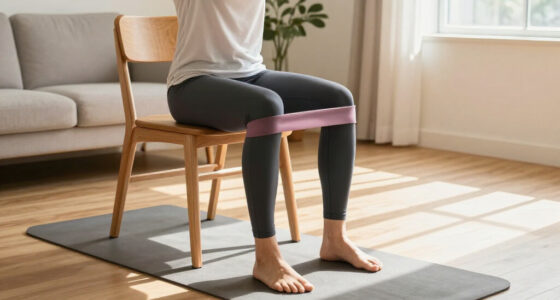
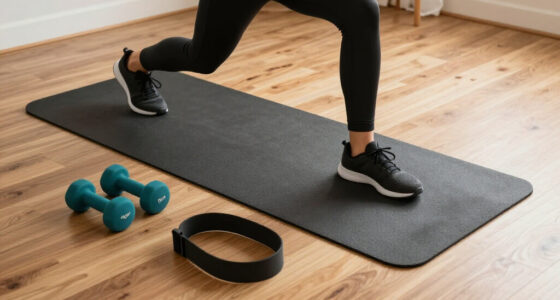
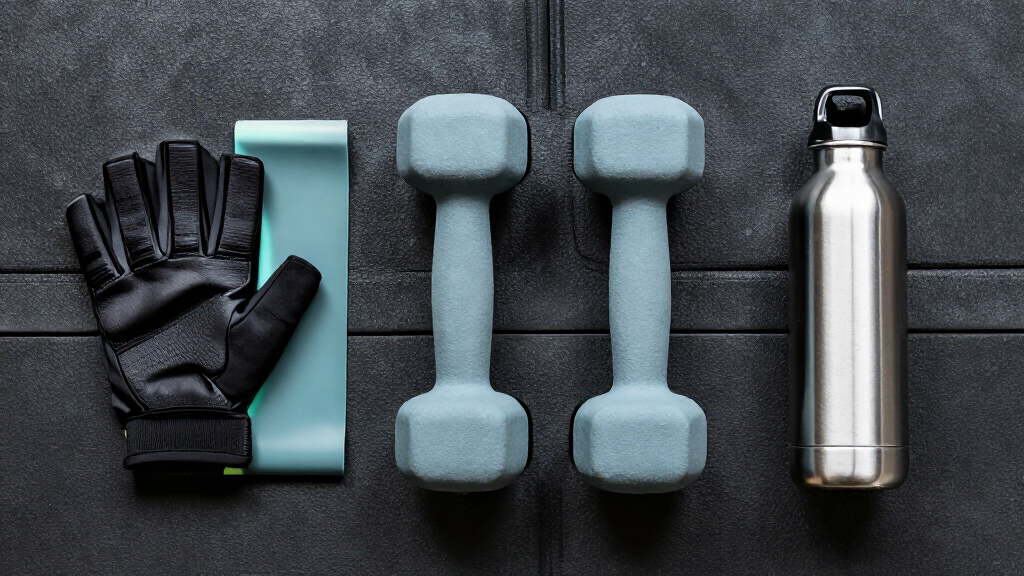
The six exercises are squats, lunges, a banded bent-over row, a banded lat pull, a child’s-pose-to-kneeling push-up and a banded floor press. The workout requires a long-loop and a short-loop resistance band, although the report does not specify resistance levels. Brown’s progression example is to add five seconds to a plank each week; that example illustrates her incremental approach rather than being one of the six listed exercises.
A Lower-Equipment Strength Routine
The routine gives readers an example of how strength exercises can be adapted around lighter equipment, without relying on a gym or heavy weights. Squats and lunges work the lower body, while the row, lat pull and floor press provide upper-body movements. The kneeling push-up variation adds another pushing exercise.
Brown’s advice also emphasizes starting at a manageable level and tracking progress, rather than beginning with her own 20-rep preference. That distinction matters for beginners: the article presents a trainer’s suggested routine and progression method, not evidence that this exact plan will suit every person or produce a particular result.
Products Worth Considering

Therabody Theragun Mini 3rd Generation Massage Gun, Black

Garmin Venu® 3 Premium Fitness Smartwatch 45mm Black

Blueair Blue Pure 511i Max Smart Air Purifier
As an affiliate, we earn on qualifying purchases.
Brown’s Approach to Repetitions
Strength training is often discussed as a way to support muscle and bone health as people age. Fit&Well’s report frames Brown’s workout as an option for people who may not feel ready to use weights, have been away from exercise, are recovering from an injury, or do not want to buy bulky equipment. Those are the report’s examples; it does not establish that resistance bands are appropriate for every injury or individual.
Brown’s stated method is to use lighter to moderate resistance and more repetitions. She told Fit&Well that when using lighter weights, another part of the workout needs to increase to challenge the body; she uses repetitions for that purpose. She advises beginners to record what they can do with good form and build from that starting point week by week.
“I don’t lift heavy because of injuries.”
— Jill Brown, speaking to Fit&Well
Limits of the Workout Report
The report does not provide the date of publication, identify the research Brown refers to, or offer independent testing of the workout. It also does not specify band resistance, rest periods, or how to modify each movement for different abilities. Brown’s account that she is stronger than ever is part of the report’s framing, but the supplied material gives no measurement or definition of strength to verify that claim.
It is also unclear whether the listed routine is suitable for someone recovering from a particular injury or managing a health condition. The article presents Brown’s recommendation for beginners, not individualized instruction. Anyone with an injury or concerns about starting exercise may need guidance from a qualified health or fitness professional.
How Beginners Can Progress
Brown’s suggested next step is to begin with six to eight controlled repetitions and record the number completed with good form. She recommends adding repetitions incrementally in following weeks; her example increases a 20-second plank by five seconds each week. The report does not set a fixed schedule for increasing resistance or explain what to do if an exercise causes pain.
Fit&Well’s article presents the routine as a starting point rather than a supervised training plan. Readers seeking a version tailored to an injury, specific health needs or experience level would need advice beyond the general guidance included in the report.
Key Questions
Who is Jill Brown?
Brown is a 59-year-old board-certified health and wellness coach, personal trainer and Pilates instructor, according to Fit&Well.
What exercises are in Brown’s beginner workout?
The six movements are squats, lunges, a bent-over band row, a banded lat pull, a child’s-pose-to-kneeling push-up and a banded floor press.
How many repetitions does Brown recommend for beginners?
Brown suggests starting with six to eight repetitions and building gradually. She says she personally favors 20 reps, but does not recommend that as the beginner starting point.
What equipment does the routine require?
The report says the workout uses a long-loop and a short-loop resistance band. It does not specify the bands’ resistance levels.
Does the report show that the workout is suitable for everyone?
No. It describes Brown’s general recommendation, but does not assess individual injuries, health conditions or fitness levels. The report does not establish that the routine is appropriate for every reader.
Source: rss