
TL;DR

Get health and wellness essentials delivered free with Prime
- Fast, free delivery on millions of items
- Prime Video, Amazon Music and more included
- Member-only deals all year
Personal trainer Pippa Sealey says shorter rest periods and unilateral exercises can add challenge to home dumbbell workouts when heavier weights are unavailable. Her sample routine combines those approaches in supersets and tri-sets, but the report does not provide evidence that the workout suits every fitness level.
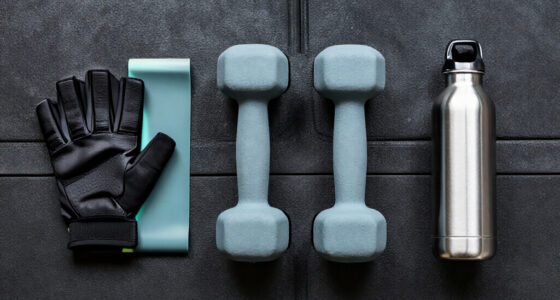
Personal trainer Pippa Sealey has shared two ways to make home dumbbell workouts more challenging without buying heavier weights: use shorter rest periods and add unilateral movements, which work one side of the body at a time. In a workout published by Fit&Well, she applies those methods through supersets and tri-sets, offering an option for people who already know basic strength exercises.
Sealey said she turns to shorter rests and one-sided exercises when she does not have access to heavier loads at home. A superset pairs two exercises in sequence, with little or no rest between them; the trainee rests after completing the pair. A tri-set follows the same idea with three exercises. The workout repeats each group for three rounds before moving to the next group.
Sealey also suggested agonist supersets, which pair exercises that target the same muscle group to increase the work placed on that area. The supplied report describes her routine as using unilateral exercises and supersets, though its exercise list also includes bodyweight movements and multi-exercise groups. It does not specify dumbbell weights, a weekly schedule, or a progression plan.
The routine starts with deficit calf raises, hamstring bridge marches and a 60-second wall sit. Later groups include a single-leg Romanian deadlift and split squat, followed by push-ups and a single-arm dumbbell push press. Other listed exercises include a side-plank hip lift, a plank dumbbell pull-through and a dumbbell sit-up. Most movements are prescribed for three sets; rest periods are generally zero between exercises, with 60 to 90 seconds after certain groups.
How the Routine Adds Challenge
For people working out with a fixed set of dumbbells, Sealey’s suggestions offer ways to change the demands of a session without purchasing more equipment. Reducing the pause between exercises can make a workout denser, while single-leg or single-arm variations ask each side to perform work separately. The report presents these as training strategies, not as a guarantee of continued strength gains.
The routine may also help readers see how those ideas fit into a session rather than treating them as abstract tips. It includes lower-body, upper-body and core exercises, with bodyweight moves alongside dumbbell work. However, the article does not report research comparing this routine with other programs, nor does it establish a particular outcome such as muscle growth or improved fitness.
Products Worth Considering

BowFlex Results Series SelectTech Dumbbells

Therabody Theragun Mini 3rd Generation Massage Gun, Black

Therabody SmartGoggles 2nd Gen Heated Eye and Temple Massager
As an affiliate, we earn on qualifying purchases.
Why Home Weights Can Stall
Fit&Well’s report frames the advice around a common limitation of home strength training: someone may continue using the same dumbbells for months and find that the workouts no longer feel as demanding. Sealey’s response is to alter exercise selection and rest structure rather than rely only on heavier loads.
The report says the workout is intended for people already confident with fundamental movements such as squats and deadlifts. It does not present the routine as a beginner program. The source material ends partway through the instructions for the single-arm push press, so it does not provide a complete step-by-step guide for every listed movement.
“You may also want to use more agonist supersets.”
— Pippa Sealey, as quoted by Fit&Well
Limits of the Published Workout
The supplied report does not state when it was published, what dumbbell weights Sealey used, or how readers should adjust the workout to match their ability. It also does not provide evidence that shorter rests or unilateral exercises will produce a specific result for every person. The source text cuts off during the push-press instructions, and its list skips a numbered exercise label, leaving some details of the full program unclear.
Readers’ experience will depend on factors the report does not address, including their training history, available equipment and ability to perform the movements with control. The workout is described as suitable for people already comfortable with basic lifts, not as a general prescription for everyone.
Before Trying the Routine
Fit&Well’s published routine provides the exercise order, set and repetition targets, and rest guidance for most of the workout. The supplied material does not announce a follow-up, further trainer comment or additional evidence. Anyone considering the routine can first check that they can perform its movements with good form and adapt the load or exercises to their circumstances; people with health concerns can consult a qualified exercise or health professional.
Key Questions
What are Sealey’s two tips for home dumbbell workouts?
She recommends shorter rest periods and unilateral exercises, which work one side of the body at a time, when heavier weights are not available.
What is a superset?
A superset is a sequence of two exercises performed one after the other, followed by rest. Sealey also mentions agonist supersets, which pair exercises for the same muscle group.
Who is the workout designed for?
The Fit&Well report describes it as intended for people already confident with basic movements such as squats and deadlifts. It is not presented as a beginner routine.
Does the report say the workout guarantees results?
No. It describes ways to make a session more challenging but does not provide evidence of guaranteed strength, muscle or fitness outcomes.
Source: rss