
TL;DR

Get health and wellness essentials delivered free — and shop member deals
- Fast, free delivery on millions of items
- Access to Prime Big Deal Days deals on October 6–7
- Prime Video, Amazon Music and more included
Purdue researchers reported that fragrances released by conventional and botanical cleaning products can react with indoor ozone to form nanoparticles within minutes. The researchers say ventilation and unscented products may reduce exposure, but the health effects of these specific particles and the risk in typical homes remain unclear.
Researchers led by Brandon Boor of Purdue University reported that fragrances from conventional and botanical cleaning products can react with indoor ozone to form nanoparticles within minutes. The findings, presented at the American Chemical Society’s fall meeting, point to a source of indoor air pollution that may be hard to notice because the particles are invisible and many home monitors may not detect them.
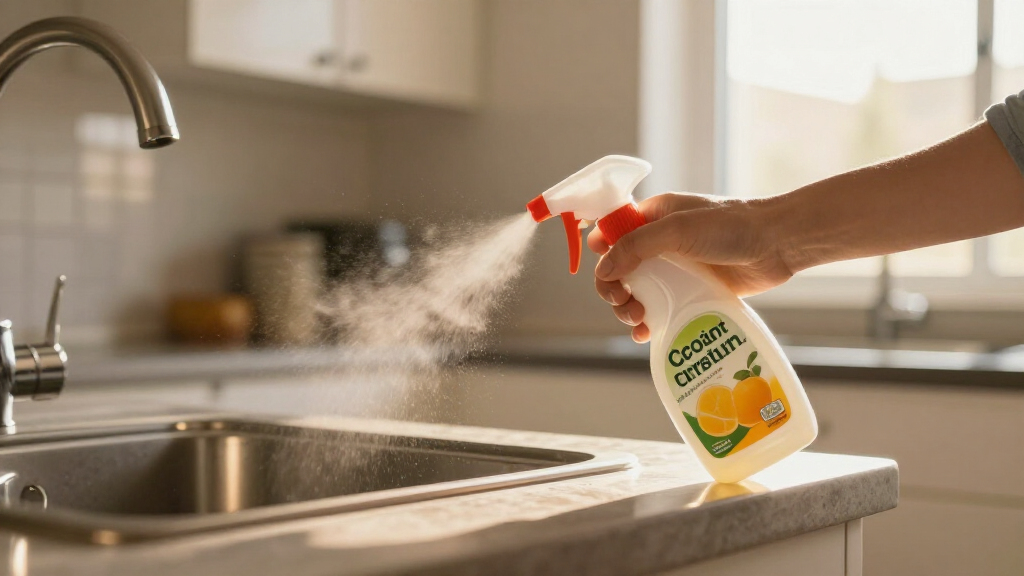
The team tested scented liquid cleaners, botanical disinfectant sprays and wipes in a model home at Purdue, where researchers recreated routine tasks such as mopping floors, spraying counters and wiping surfaces. The products released fragrance compounds including pinene, limonene, thymol and linalool. When these compounds reacted with ozone in the air, the experiments produced billions or trillions of particles, depending on the product, the researchers reported.
Most of the particles measured 1 to 30 nanometers across, placing them among nanoparticles or ultrafine particles. The researchers said cleaning temporarily raised ultrafine particle levels above outdoor measurements. Because particles in this size range can fall outside the detection range of at-home air quality monitors, a person may not see or measure the change with ordinary devices.
Boor and colleagues also studied scented surface cleaners alongside germicidal far-UV lamps. They said the lamps produced ozone, with concentrations reaching roughly 20 to 40 parts per billion in the model home. With ozone and fragrance compounds both present, nanoparticle production intensified. The experiments compared particle exposure with roadside exposure, but the researchers said the particles differed in composition; the comparison concerned respiratory dose, not identical pollution.
Invisible Particles During Routine Cleaning
The work draws attention to a potential indoor exposure that may occur during an ordinary household task and may not be visible as dust, smoke or haze. Boor said the particles can settle through the respiratory tract and reach deep areas of the lungs. He also said they may contribute to irritation and inflammation, and some may have the potential to enter the bloodstream. These are health concerns described by the researchers; the report does not establish that the tested cleaning episodes cause specific illnesses.
The researchers recommend unscented products and ventilation, such as exhaust fans or open windows, as ways to reduce exposure. They also advise avoiding ozone-generating devices while using scented cleaners. Those steps address the conditions identified in the experiments, though the report does not quantify how much each measure lowers particle levels in different homes.
Fragrance Chemistry Moves Indoors
Scientists have long studied how plant-emitted compounds such as terpenes react with ozone outdoors. In forests, these reactions can produce particles that grow and help seed clouds, but the process generally unfolds amid lower terpene concentrations. Cleaning can create a different setting: fragrance compounds evaporate from sprayed droplets and freshly cleaned surfaces, and their concentrations indoors can rise sharply.
Boor began examining cleaning agents and disinfectants during the COVID-19 pandemic with Purdue colleague Nusrat Jung. The team used a small model house with a working kitchen, wood floors and a bathroom to reproduce household cleaning. The new findings were presented during the symposium Healthy Indoor Spaces: Bridging the Microbiome and Chemistry at the ACS fall meeting at McCormick Place.
“Importantly, cleaning removes viruses and bacteria from surfaces, but it can also generate invisible air pollution. There’s no visible dust or smoke in the air, but these particles are forming.”
— Brandon Boor, Purdue University assistant professor
Health Effects Need Further Study
The findings describe particle formation in a model home, but the report does not specify how exposure varies across different home sizes, ventilation systems, cleaning habits or product formulations. It also does not establish the long-term health effects of these particular particles or provide a clinical risk estimate for a typical cleaning session.
The researchers’ roadside comparison refers to respiratory dose and notes that particle composition differs. The available report does not provide enough detail to independently assess that comparison’s assumptions or how it applies to people in different settings. It is also unclear how often households reach the ozone and fragrance conditions used in the experiments.
Ventilation and Product Choices
The researchers suggest choosing unscented cleaning products, running exhaust fans or opening windows during cleaning, and avoiding ozone-generating devices when scented cleaners are in use. Their reported results add indoor particle formation to questions researchers can examine across more products and household conditions. The report does not give a timeline for further findings or say when additional results will be released.
Key Questions
What did the Purdue researchers find?
They reported that fragrance compounds released by conventional and botanical cleaning products can react with indoor ozone and form nanoparticles within minutes in their model-home experiments.
Were the particles visible?
No. The researchers said the particles did not appear as smoke, dust or haze. They also noted that many home air quality monitors may not detect particles this small.
What steps did the researchers suggest?
They suggested using unscented products, improving ventilation with an exhaust fan or open windows, and avoiding ozone-generating devices while using scented cleaners.
Does the study prove scented cleaners cause illness?
No. The report describes particle formation and potential respiratory concerns, but it does not establish that these particles cause specific illnesses or quantify long-term risk.
Source: rss
Fall Picks
fall essentials
As an affiliate, we earn on qualifying purchases.