
TL;DR

Get health and wellness essentials delivered free with Prime
- Fast, free delivery on millions of items
- Prime Video, Amazon Music and more included
- Member-only deals all year
Researchers at Nottingham Trent University and Integrated System Technologies Ltd developed a prototype home-monitoring system combining radar, low-resolution thermal sensors and smart plugs. Tests in a mock home found that combining sensor data improved activity recognition, but the study does not establish how well the system detects emergencies in occupied homes or whether it can extend independent living.
Researchers at Nottingham Trent University and Integrated System Technologies Ltd have developed and tested a prototype that combines radar, low-resolution thermal sensors and smart plugs to monitor activity at home. The system is intended to identify unusual patterns that could indicate a fall or another health concern, potentially helping older people remain at home, but its reported testing took place in a mock domestic environment, not as a demonstrated care service in residents’ homes.
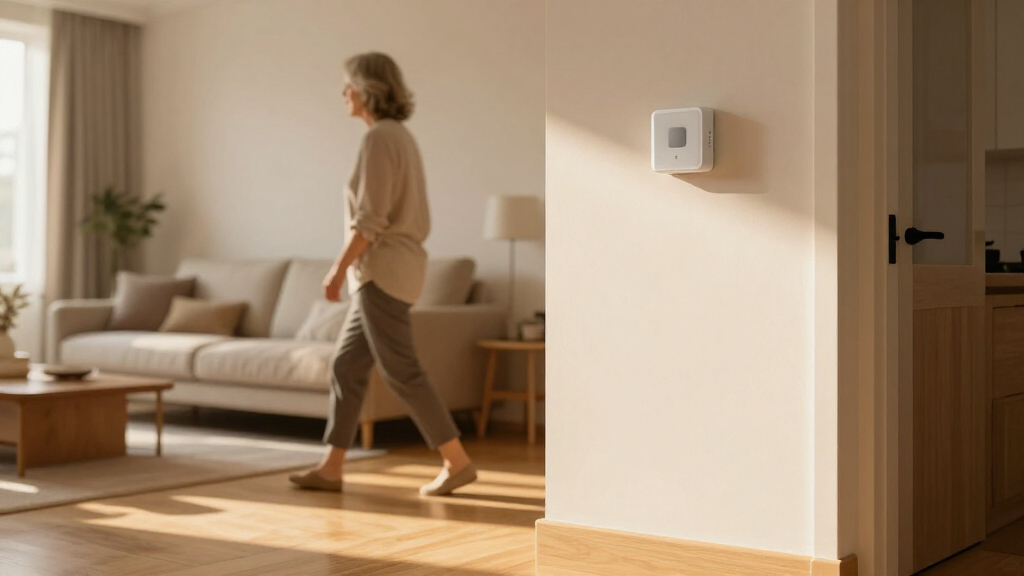
The research, published in the journal Sensors, describes an artificial-intelligence system that combines information from three types of sensor. Millimeter-wave radar tracks movement; thermal sensors identify broad postures such as sitting, standing, walking or lying down; and smart plugs monitor appliance use associated with everyday routines. The researchers say the thermal output is kept at low resolution and does not show facial features or personal identity.
The team tested the system in a mock home with six room layouts, including bedrooms and living areas with different furniture arrangements. Researchers recorded a series of activities to see how accurately the technologies identified movement and posture. They reported that combining data from all three sensor types improved performance compared with using the technologies separately. The supplied study summary does not give a numerical accuracy rate or specify how often the system misclassified activity.
The system is designed to learn an individual’s routines over time and flag deviations, such as prolonged inactivity or changes in appliance use. The researchers describe potential uses including detecting possible falls, heart attacks, strokes or other critical illnesses. Those are intended applications, not confirmed clinical capabilities: the reported evaluation focused on activity recognition in a simulated domestic setting. If an emergency is identified, the proposed system would notify care professionals or relatives so they could check on the resident remotely or in person.
A Privacy-Focused Route to Home Support
The project addresses two practical concerns in care for older people: how to notice when someone may need help, and how to do so without continuously filming them or requiring them to wear a device. The researchers present the sensors as a way to observe broad routines while limiting the collection of identifiable visual information. Whether that approach will feel acceptable to residents and their families would depend on how data are handled and who can access alerts.
For care providers and relatives, a reliable alert could prompt a check-in after a sudden change or an unusually long period without movement. Longer-term changes in mobility or daily routines might also encourage a conversation about additional support. But the study does not show that alerts improve health outcomes, prevent injuries, or allow people to remain at home for a specified additional period. Those benefits remain possibilities to test, rather than results established by this prototype research.
Products Worth Considering

Oura Ring 4 Smart Ring – Silver – Size 8

Hyperice Normatec Elite Wireless Compression Boots, Standard Size

Blueair Blue Pure 511i Max Smart Air Purifier
As an affiliate, we earn on qualifying purchases.
How the Three Sensors Work Together
The study is titled “Privacy-Preserving Ambient Sensing for Activities of Daily Living: Multimodal Radar-Thermal Human Activity Recognition and Smart Plug Appliance Recognition.” It was conducted by researchers from NTU’s School of Architecture, Design and the Built Environment and School of Science and Technology, alongside staff from Integrated System Technologies Ltd. The research was published in Sensors in 2026.
Each component provides a different kind of information. Radar detects movement around a home, while thermal sensors estimate posture without producing detailed facial images. Smart plugs record when connected appliances are used, which can offer clues about routines such as making a drink or preparing food. The AI combines these signals and learns patterns over time, according to the research description. The team argues that the combination can provide a broader picture than any one sensor alone.
“This technology aims to support the growing number of older adults who wish to remain in their own homes for longer, rather than moving into residential care.”
— Dr. Yangang Xing, lead researcher at Nottingham Trent University
Real-Home Performance Still Unknown
The published account describes testing in a mock domestic environment; it does not report a trial involving older residents living in their own homes. The material provided also does not state the system’s numerical detection accuracy, false-alarm rate, or ability to distinguish an emergency from ordinary changes in activity. Performance in varied homes and for people with different movement patterns remains unclear.
It is also not clear how the system would be installed and maintained, how much it would cost, what data would be stored or for how long, or what safeguards would govern access by relatives and care staff. The researchers describe alerts for possible emergencies, but the study summary does not establish how quickly alerts would be delivered or what happens if a sensor fails or a notification is missed. No evidence in the report confirms that the system can diagnose a heart attack, stroke or other illness.
Evidence Needed Before Home Use
The next step for judging the system’s value would be testing it in occupied homes over time, including whether it recognizes meaningful changes without producing excessive false alarms. Further evaluation would also need to show how residents respond to the sensors, how caregivers act on notifications and how privacy protections work in everyday use. The source material does not announce a timetable for those studies or a launch date for a commercial product.
For now, the published results support the narrower finding that combining radar, thermal and appliance-use data improved activity recognition in the team’s mock-home testing. Whether the prototype can reliably identify emergencies and support independent living in practice remains to be established.
Key Questions
What does the home sensor system monitor?
It combines radar movement data, low-resolution thermal readings that indicate posture, and smart-plug records of appliance use to identify patterns in daily activity.
Does the system use cameras or wearable devices?
The described prototype uses radar, thermal sensors and smart plugs, rather than cameras or wearable devices. Researchers say the thermal output is kept at low resolution and does not reveal faces.
Has it been shown to detect falls or strokes reliably?
The researchers identify falls, strokes and other emergencies as possible targets, but the reported study tested activity recognition in a mock home. It does not establish reliable detection of those medical events in real homes.
Could it help older people live independently for longer?
That is the intended potential benefit described by the research team. The study has not shown that the system extends independent living or improves health outcomes.
What happens when the system detects unusual activity?
The proposed system would notify care professionals or loved ones, who could check on the resident remotely or in person. The report does not specify alert response times or operational procedures.
Source: rss