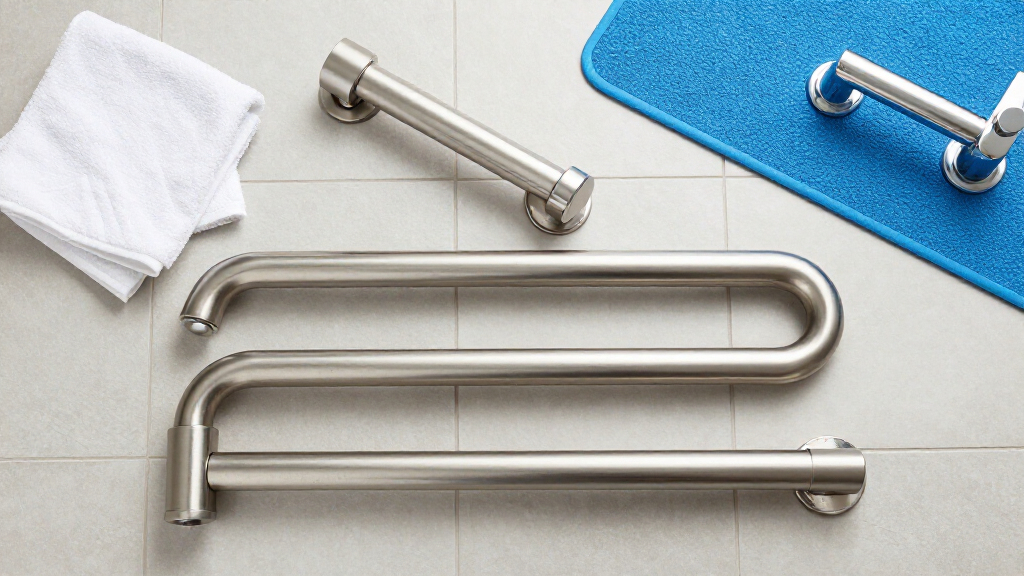
People comparing grab bars for fall prevention are usually deciding between a permanent support point and a removable one. Wall-mounted grab bars attach to framing or other suitable structural backing and are generally the stronger choice for standing, sitting, or recovering balance. Suction-cup grab bars attach to smooth, nonporous surfaces, making them easier to place and remove, but their grip can fail if the surface, seal, or installation is unsuitable.

Get health and wellness essentials delivered free with Prime
- Fast, free delivery on millions of items
- Prime Video, Amazon Music and more included
- Member-only deals all year

Grab Bars for Shower, 16 Inch Shower Handle, 2 Pack, Polished Nickel
- ✔ Brand: Ravinte Hardware
- ✔ Model: RH25YSBS400YS2
- ✔ Pack quantity: 2 bars

TAILI Grab Bars for Shower – Suction Handles, 2-Pack, 16.8" Grey
- ✔ Brand: TAILI
- ✔ Model: AW678
- ✔ Pack quantity: 2 handles

TAILI Shower Grab Bars, 12.2 inch, 2 Pack, Grey
- ✔ Brand: TAILI
- ✔ ASIN: B0CVXMZNMS
- ✔ Pack quantity: 2 bars
The difference matters most when someone expects to lean heavily on the bar. For a shower, tub, or toilet area where a person needs reliable weight-bearing support, a correctly installed wall-mounted bar is the better choice. A suction model may suit light balance assistance, temporary use, or travel when the surface is compatible and the bar is checked before each use. Neither option prevents every fall; placement, fit, and the user’s mobility all matter.
At a Glance
| Criteria | Wall-mounted grab bars | Suction-cup grab bars | Winner |
|---|---|---|---|
| Weight-bearing support | Strong when securely fixed to appropriate structural backing; follow product instructions and rated limits | Not suitable for relying on as a weight-bearing safety support | A |
| Installation and placement | Requires suitable fasteners and careful placement; installation may call for a qualified professional | Attaches and removes without drilling when used on a compatible surface | B |
| Surface compatibility | Can be fitted to suitable walls with adequate backing; wall construction and finish matter | Needs a smooth, clean, nonporous surface; grout lines, texture, and some finishes prevent secure attachment | A |
| Long-term reliability | A permanent fixture; check fasteners and condition periodically | Grip can weaken or release; inspect and reattach according to the maker’s directions | A |
| Flexibility and portability | Fixed once installed, though it can be repositioned through further installation work | Easy to move or take along, within the limits of compatible surfaces | B |
| Upfront cost and value | Usually costs more to buy and install, but offers better value when dependable support is needed | Usually cheaper initially, but the lower cost does not make it appropriate for heavy support | Depends |
Grab Bars for Shower, 16 Inch Shower Handle, 2 Pack, Polished Nickel
For buyers able to install into an appropriate wall, the Ravinte pair is our strongest fit for everyday fall-prevention support. These 15.75-inch stainless steel bars use a knurled surface that is intended to help wet hands hold on, and the screw-mounted design gives them a different role from the two TAILI suction models. The stated 500-pound capacity is higher than the 240 pounds per bar listed for TAILI’s 16.8-inch handles, though capacity figures do not guarantee safety if the bars are attached to unsuitable material or installed incorrectly.The tradeoff is the commitment: installation requires drilling, and buyers need to verify appropriate backing, placement, and fasteners rather than treating a shower wall as automatically strong enough. The polished nickel finish can also fit more readily with bathroom hardware than the grey TAILI handles, but appearance comes second to secure installation. Compared with TAILI’s short pair, Ravinte provides more length and a more substantial mounting approach; compared with the longer TAILI, it gives up removability. We would choose this option for a lasting setup, and skip it when drilling or proper wall reinforcement is not available.
Pros:
- Screw-mounted construction for a permanent installation when correctly anchored
- Stainless steel bars with a knurled grip intended for wet hands
- 15.75-inch length offers more holding area than TAILI’s 12.2-inch pair
- Two bars are included, with a stated 500-pound capacity
Cons:
- Installation requires drilling and appropriate wall backing
- Two bars may not cover every location needed in a larger bathroom
- Capacity claim does not confirm safe use with an unsuitable wall or installation
Best for: Households seeking permanent shower support and able to confirm proper wall backing and installation.
Not ideal for: Renters or anyone who cannot drill into an appropriate support structure, or buyers seeking a temporary handle.
Bottom line: Choose Ravinte for a more permanent grab-bar setup when the wall can support correct screw mounting.
“Choose Ravinte for a more permanent grab-bar setup when the wall can support correct screw mounting.”
TAILI Grab Bars for Shower – Suction Handles, 2-Pack, 16.8" Grey
When drilling is impractical, TAILI’s 16.8-inch suction handles offer the most reach among the removable choices here. Each handle uses dual suction cups with locking latches and an anti-slip strip; the listed load is up to 240 pounds per bar. That makes this pair more substantial on paper than the shorter TAILI set, whose supplied specifications do not state a capacity. Both TAILI models share the same key limitation: they require a smooth, non-porous, airtight surface.That surface requirement defines the buyer fit. These handles are easier to install and remove than Ravinte’s drilled bars, so they may suit a household that wants flexibility or cannot make permanent changes. But suction attachment depends on the actual surface and correct setup, so we would not choose them for a textured, porous, uneven, or otherwise incompatible wall. They can provide a handhold for balance, but buyers should not assume a removable suction handle is equivalent to a properly installed permanent grab bar for supporting body weight. The longer length is useful for more reach, though it still cannot compensate for a poor attachment surface.
Pros:
- Dual suction cups and locking latches avoid drilling
- 16.8-inch length provides more reach than the shorter TAILI pair
- Anti-slip strip adds grip texture
- Listing states up to 240 pounds per bar
Cons:
- Works only on smooth, non-porous surfaces
- Attachment depends on correct setup and the condition of the surface
- Removable suction mounting is not equivalent to a properly anchored permanent bar
Best for: People who need a removable, no-drill handle for a confirmed smooth, non-porous surface.
Not ideal for: Bathrooms with textured, porous, uneven, or incompatible tile, or users who need permanent weight-bearing support.
Bottom line: Pick the longer TAILI handles for removable assistance only when the mounting surface is explicitly compatible.
“Pick the longer TAILI handles for removable assistance only when the mounting surface is explicitly compatible.”
TAILI Shower Grab Bars, 12.2 inch, 2 Pack, Grey
Where a longer handle would crowd a small shower or bathroom fixture, the 12.2-inch TAILI pair takes up less wall space. It uses suction cups and an anti-slip strip like the longer TAILI option, so it keeps the same no-tool convenience and the same dependence on a smooth, airtight, non-porous surface. Its shorter size makes it easier to place in a constrained area, but it also gives us less gripping length than the 16.8-inch model.The product details identify use around showers, toilets, kitchens, and bathrooms, but they do not provide a load-capacity figure. That omission makes it harder to compare the handle for demanding support needs; we should not infer a capacity from the other TAILI model. As a result, we see this as a compact balance aid for a suitable surface, not the best choice when a user needs a more substantial permanent handhold. Ravinte is the more appropriate candidate when drilling and correct anchoring are possible, while TAILI’s longer pair is preferable when removable installation and extra reach matter. Check that the tile is at least 4 by 4 inches and that the surface seals properly before considering this set.
Pros:
- 12.2-inch bars suit tighter layouts
- Installs without tools or drilling
- Removable and reusable suction design
- Anti-slip strips provide a textured contact surface
Cons:
- Requires smooth, airtight, non-porous surfaces
- Product details do not state a load capacity
- Specified for tiles at least 4 by 4 inches
Best for: Buyers with limited wall space who want a short removable handle on a verified smooth surface.
Not ideal for: People who need a stated capacity, longer hand placement, or permanent support anchored into a wall.
Bottom line: Use this compact pair only for light balance assistance on a compatible surface when its shorter length fits the space.
“Use this compact pair only for light balance assistance on a compatible surface when its shorter length fits the space.”
As an Amazon Associate we earn from qualifying purchases.
Key Differences
The most important difference is how each bar attaches. A wall-mounted bar transfers force through fasteners into suitable structural backing. When selected and installed correctly, it is designed to provide a more dependable handhold for movements such as stepping over a tub edge or lowering onto a toilet. Installation quality and placement are central: a bar secured only to an unsuitable wall surface may not provide the support someone expects.
A suction-cup bar relies on a sealed connection with the surface. That makes it convenient to reposition, but also limits where it can be used and how much support a person should expect. A clean, smooth surface and correct installation are essential, and the attachment needs regular checking. The practical tradeoff is clear: wall-mounted bars take more planning and often more money, while suction models offer convenience at the cost of dependable weight-bearing support.
For fall prevention, think about the movement the bar is meant to help with. If a person may pull or lean hard on it, choose a properly installed wall-mounted model and get advice on placement when needed. If the goal is a light balance cue on a compatible surface, a suction bar may offer a temporary aid, but it should not be the only support for someone at risk of falling.
Detailed Comparison
Weight-bearing support (Wall-mounted grab bars wins — major)
Wall-mounted bars win by a major margin. When attached to appropriate structural backing according to the maker’s instructions, they provide a more dependable point to grip during transfers and balance challenges. A suction bar depends on the seal against the surface, so it should not be used to catch a fall or support a person’s full weight. In practice, anyone likely to lean heavily needs a properly installed wall-mounted bar.
Installation and placement (Suction-cup grab bars wins — moderate)
Suction bars win for speed and simplicity; the gap is moderate. They can be attached or moved without drilling when the surface is compatible. Wall-mounted models need suitable fastening and careful positioning, and professional installation can add cost. That extra work is worthwhile when the bar will be used for substantial support: placement should match the user’s reach and movement, not just the nearest convenient wall.
Surface compatibility (Wall-mounted grab bars wins — moderate)
Wall-mounted bars win by a moderate margin. They can work across more types of wall when the construction allows secure installation, though backing and finish still need assessment. Suction bars need a clean, smooth, nonporous surface; textured tile, grout lines, and uneven finishes can prevent a reliable seal. A renter should check both the wall and housing rules before choosing a permanent fixture.
Long-term reliability (Wall-mounted grab bars wins — major)
Wall-mounted bars win by a major margin. A properly fitted bar remains in place without depending on a suction seal that may need repeated checking. Fasteners and the bar still require periodic inspection, and any looseness or damage should be addressed before use. Suction models need more frequent attention to their attachment and are less suitable as the main support for routine transfers.
Flexibility and portability (Suction-cup grab bars wins — major)
Suction bars win by a major margin. They can be removed and reattached on compatible surfaces, which helps with temporary arrangements or travel. A wall-mounted bar stays where installed, and moving it means another installation. This convenience does not overcome the suction model’s support limits: portability makes it adaptable, not equivalent to a permanent safety fixture.
Upfront cost and value (moderate difference)
The winner depends on the job, so this is a moderate difference. Suction bars generally cost less at purchase and avoid installation charges. Wall-mounted bars can cost more once suitable hardware or professional fitting is included. For light balance help on an appropriate surface, the lower-cost removable option may be reasonable. For weight-bearing support, a wall-mounted bar offers better value because it is designed for the more demanding task.
Wall-mounted grab bars: Pros and Cons
Pros:
- More dependable support when installed correctly into suitable backing
- Suitable for regular use during transfers and balance support
- Works across more surface types when the wall allows secure fastening
Cons:
- Installation takes planning and may require professional help
- Costs more upfront when fitting is included
- Fixed placement is inconvenient if needs or room layout change
Suction-cup grab bars: Pros and Cons
Pros:
- Quick to attach and remove on compatible surfaces
- Portable and easy to reposition
- Lower initial cost and no drilling
Cons:
- Should not be relied on for full-weight support or fall catching
- Only suitable for smooth, clean, nonporous surfaces
- Needs regular attachment checks and can release
Who Should Choose What
Choose Wall-mounted grab bars if:
- The user needs to lean heavily or hold the bar during transfers.
- The bar will be used every day beside a tub, shower, or toilet.
- A suitable installation point can be identified and securely fitted.
Choose Suction-cup grab bars if:
- The need is for light balance assistance rather than weight-bearing support.
- A temporary or portable option is useful and the surface is smooth and compatible.
- Drilling is not allowed and the user’s support needs are modest.
Skip both if: Skip suction bars as the primary aid when someone may fall or pull hard on them. If no suitable wall installation is available, seek an occupational therapist or qualified installer to assess safer alternatives and placement.
Value for Money
Suction bars are cheaper at the outset, but their lower price is worthwhile only when the user needs a light handhold and can use a compatible surface. They are poor value if bought to provide the weight-bearing support of an installed fixture. For daily assistance with transfers or substantial leaning, paying more for a properly mounted bar is justified by the more secure attachment and appropriate use. Budget for installation if the wall needs assessment or specialist fitting.
Final Verdict
Choose a wall-mounted grab bar for fall prevention when someone needs reliable support to step, sit, stand, or regain balance. Its installation takes more effort and money, but it is the stronger choice for regular, weight-bearing use. Choose a suction-cup bar only for temporary or light balance assistance on a surface made for suction attachment, and check it as directed before use. The deciding factor is how much weight the user may put on the bar: if substantial support is needed, choose a correctly installed wall-mounted model.
Frequently Asked Questions
Are suction grab bars safe for fall prevention?
They can offer a light handhold for balance when properly attached to a compatible surface, but they should not be relied on to catch a fall or support a person’s full weight. Follow the manufacturer’s directions and inspect the attachment before use.
Can a grab bar be installed on tile?
Some tile walls can support a wall-mounted bar if the installer can securely fasten it to suitable backing. Suction bars need a smooth, nonporous tile surface and should not bridge grout lines or sit on textured areas. Check the specific product instructions and wall construction.
Where should a fall prevention grab bar go?
Place it where the user can reach and grip it during the movement that needs support, such as stepping into a tub or lowering onto a toilet. The right position depends on the person’s height, mobility, and room layout. An occupational therapist or qualified installer can help assess placement.
Is a more expensive wall-mounted grab bar worth the cost?
For someone who needs to lean heavily or use a bar during routine transfers, yes: the cost of a suitable bar and secure installation buys a more dependable support point. If the need is only a light balance cue on a compatible surface, a removable suction model may be adequate.