
TL;DR

Get health and wellness essentials delivered free with Prime
- Fast, free delivery on millions of items
- Prime Video, Amazon Music and more included
- Member-only deals all year
Fall prevention grab bars give you a steady handhold for movements such as stepping into a shower, sitting down, or standing from the toilet. Choose bars that suit the user’s reach and grip, and have them secured to structural support according to the product instructions. They can improve stability and confidence, but work best alongside good lighting, nonslip surfaces, and clear pathways.
A slick bathroom floor can turn one ordinary step into a scary wobble. A properly placed grab bar gives your hand somewhere steady to land as you enter the shower, lower yourself onto the toilet, or rise again.
This guide explains why grab bars help, where they may fit, and what to check before choosing one. You’ll also see why a bar that looks sturdy can still be unsafe if its mounting does not match the wall and the product instructions.
Falls are a major cause of injury, especially for older adults and people with balance, mobility, or vision challenges. A fall prevention grab bar can support common bathroom movements and build confidence, but it cannot remove every hazard. Think of bathroom safety like a chain: lighting, flooring, clear space, suitable footwear, and a secure handhold each add a link.
Place bars near the tub or shower and toilet according to the user’s actual reach and movements.
Check grip comfort, length, finish, and product instructions before choosing a bar.
A bar’s safe capacity depends on its mounting hardware, wall structure, and installation quality.
Do not assume a towel bar or suction product can support body weight; check its stated use.
Pair grab bars with clear pathways, good lighting, suitable footing, and periodic inspections.
See how a grab bar helps during everyday bathroom movements
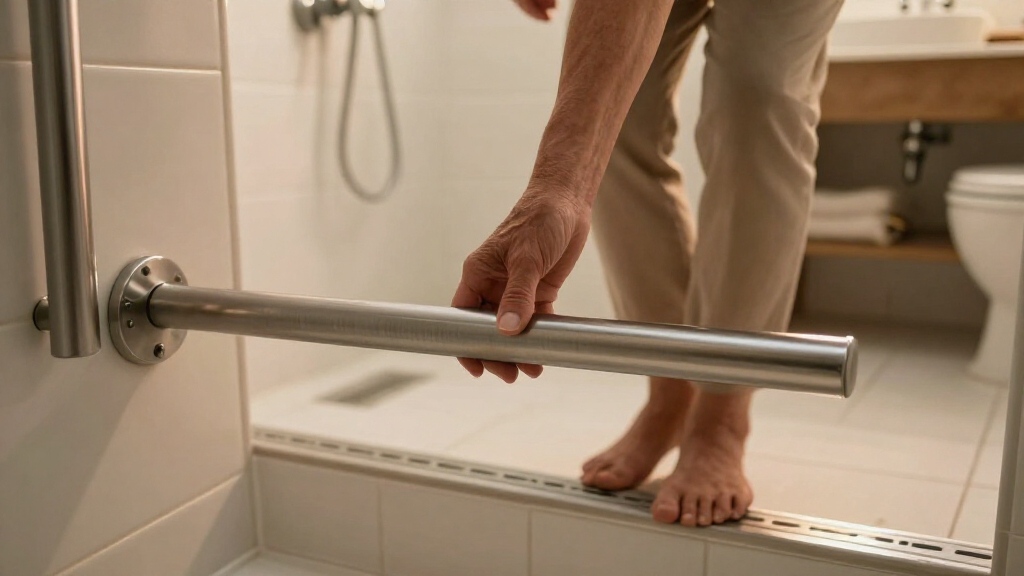
Fall prevention grab bars provide a stable handhold for movements such as stepping into a tub, shifting in a shower, or standing from a toilet. They can help you steady yourself at the moment your balance changes, though they do not prevent every fall or replace other safety measures.
Bathrooms combine several risks in a small space: wet floors, tight turns, and the raised edge of a tub. Someone who feels steady walking down a hallway may still need help lifting a foot over that edge while reaching for a towel. A fixed bar gives the hand a dependable point of support through that movement.
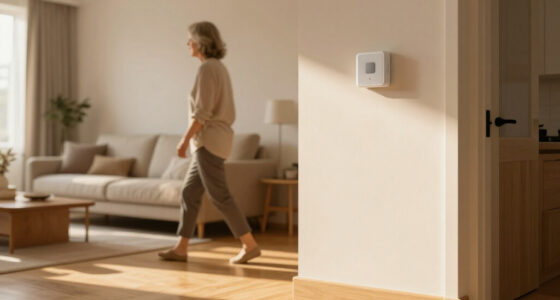
For example, imagine your father getting up at night to use the bathroom. A light near the doorway helps him see the path, while a bar beside the toilet gives him a place to hold as he rises. Each feature addresses a different part of the trip.
A grab bar is one useful handhold in a broader fall prevention plan, not a promise that falls cannot happen.
Other parts of the plan matter, too. Keep the route clear, use nonslip surfaces where appropriate, and make sure lighting lets you see changes in floor level. If the user has changing balance or mobility needs, ask a qualified health professional about an assessment. Their advice can connect the equipment to the person’s actual movements.
Products Worth Considering

Hyperice Normatec 3 Leg Compression Boots – Full Leg Recovery, Standard Size

Oral-B iO Series 5 Rechargeable Electric Toothbrush with Travel Case, White

Fitbit Sense 2 Smartwatch – Blue Mist / Pale Gold
As an affiliate, we earn on qualifying purchases.
Choose bar locations by watching how the person moves
Place grab bars where the user needs support during a transfer: commonly near the tub or shower entrance, inside the shower, and beside the toilet. The right position depends on the person’s reach, strength, movement pattern, and bathroom layout, so a standard-looking placement may not work for everyone.
Watch a normal movement carefully, without asking the person to take a risk. Where do they reach before stepping over the tub? Do they push up from the toilet using one hand, or turn before standing? These details help identify where a bar could offer support. An occupational or physical therapist can assess transfers and recommend positions suited to the user.
Consider Maria, who can stand comfortably but struggles to turn on a wet shower floor. A bar near the entrance may help her step in, while a second bar inside the shower may give her a handhold as she turns. Someone else may need support beside the toilet more than inside the shower.
Bar shape matters as well. Straight bars suit many uses; angled or vertical bars may help with particular reaches or movements. Choose a length that is easy to grasp and a diameter that fits the user’s hand. A textured surface may feel more secure when hands are damp. Treat placement as a fit problem: the bar should meet the person’s hand where the movement calls for support, not simply look balanced on the wall.
Compare the details that make a grab bar easier to use
Choose a grab bar by checking its intended use, grip, size, material, and mounting requirements together. A decorative finish or long length cannot make up for a bar the user cannot reach or hold, and the manufacturer’s stated capacity applies only under the stated installation conditions.
For instance, a person with smaller hands may find a thick, smooth bar awkward to grip, even if it looks sturdy. A textured surface may help, but it should still be comfortable to hold and easy to clean. Corrosion-resistant material suits a damp bathroom, while a finish that wipes clean can simplify routine care.
| What to check | Why it matters | Example question |
|---|---|---|
| Reach and length | The user needs to grasp the bar during the movement. | Can they reach it before stepping over the tub edge? |
| Grip and surface | Hand size, strength, and wet conditions affect control. | Can the user hold it comfortably with damp hands? |
| Material and finish | Bathrooms expose hardware to moisture and frequent cleaning. | Is the finish suited to a damp room and simple to maintain? |
| Capacity and mounting | Safe use depends on the bar, fasteners, wall, and installation. | Do the product instructions match this wall construction? |
Newer styles include shelves or finishes designed to blend into home décor. Those features may suit your bathroom, but check that the product is rated and installed for the support you expect it to provide. Style can help a bar feel at home; fit and correct mounting make it useful.
Install the bar so the whole mounting can do its job
A grab bar must attach to structural support, such as a wall stud or properly installed blocking, using hardware suited to the wall and bar. Its stated weight capacity depends on the complete setup—not just the metal rail—so a secure-looking product does not prove that an installation can support body weight.
Before buying, read the manufacturer’s installation instructions and check what wall types and fasteners the bar requires. If you cannot confirm what sits behind the tile or drywall, consult a qualified installer. This matters especially when someone will rely on the bar while lowering or lifting their body.
Do not treat towel bars, soap dishes, or suction-cup bars as substitutes for a fixed grab bar when the user needs body-weight support. Some suction-mounted products may be designed for balance assistance or temporary use, but permitted uses differ. Read the label and instructions instead of guessing from how firmly the cup seems to stick.
Suppose you find a tile wall with no obvious stud location. A professional can help identify a suitable mounting approach for the wall and product. After installation, check that the bar does not move, and inspect it periodically for looseness, corrosion, cracks, or damage. Follow the manufacturer’s care instructions and get help if anything seems wrong.
When you are unsure whether a product or wall can support the user, pause and ask a qualified installer before relying on it.
Add grab bars to a bathroom plan that covers more than one hazard
Grab bars work best alongside other changes that address slipping, poor visibility, and clutter. A stable handhold can help with a transfer, while a clear floor and better lighting make it easier to reach that handhold safely in the first place.
Try this simple walkthrough. At night, turn on the bathroom light and follow the usual route from the bedroom. Look for loose mats, objects on the floor, shadows near steps, and places where the user needs to turn or reach. A motion-sensing light may help someone who cannot easily find a switch; a nonslip surface may address a slick area.
- Clear the route: Move laundry baskets and other objects away from the path to the toilet or shower.
- Improve visibility: Check whether the user can see the floor, tub edge, and grab bars during daytime and nighttime use.
- Review footing: Choose appropriate footwear and consider nonslip surfaces suited to the bathroom.
- Check support points: Confirm that grab bars are reachable during the movements that need support.
- Ask for an assessment: If transfers feel difficult or needs have changed, consult a qualified professional.
For example, a bright new bar cannot help much if a bathmat slides across the floor or the user cannot see it at night. Local building codes and accessibility standards may also apply, especially in rental or public settings. A therapist or installer can help connect the person’s needs, the room, and applicable requirements.
Keep a new grab bar useful with quick, regular checks
Inspect grab bars periodically for movement, loose fasteners, corrosion, cracks, or other visible damage, and follow the product’s care instructions. A bar that was secure on installation day still needs attention over time, particularly in a humid room where finishes and fittings face regular moisture.
Make the check part of a familiar routine, such as cleaning the bathroom. Look at the mounting points and the bar’s surface. If you notice movement or damage, stop relying on it and contact a qualified installer or the manufacturer for guidance rather than trying to judge its capacity by pulling harder.
Picture a household where a relative starts using the shower every morning. A quick visual check while wiping down the room can catch a loose mounting point before it becomes part of someone’s daily routine. The check takes little time, but it keeps the equipment from fading into the background as an assumed source of support.
Products with shelves or matching finishes may make a bar easier to live with, but the support purpose should remain clear to everyone in the home. If several people share the bathroom, explain which bars are intended to support movement and which fittings are only for towels or storage. That small conversation can prevent a visitor from grabbing the wrong fixture when their footing slips.
Frequently Asked Questions
Do grab bars actually prevent falls?
Grab bars can provide support during common movements, such as stepping into a shower or rising from a toilet, but they cannot prevent every fall. They work best as one part of a broader plan that also addresses lighting, flooring, clear paths, and the person’s mobility needs.
Where should grab bars go in a bathroom?
Common locations include near the tub or shower entrance, inside the shower, and beside the toilet. The best positions depend on the user’s reach, strength, transfer technique, and bathroom layout; a physical or occupational therapist can help assess those movements.
Can I install a grab bar without a wall stud?
Some products and wall systems use specialized anchors, but their suitability depends on the product, wall construction, and installation instructions. If you cannot confirm that the mounting meets the bar’s requirements, ask a qualified installer before relying on it.
Are suction-cup grab bars safe?
Some suction products are intended for temporary use or balance assistance, but their permitted uses vary. Do not assume one can support full body weight; check its label and instructions, and choose a properly rated, structurally mounted bar when body-weight support is needed.
What size grab bar should I buy?
Choose a length the user can reach during the relevant movement and a grip diameter that feels comfortable in their hand. A therapist or qualified installer can help determine suitable placement and size for the person and bathroom.
Are grab bars only for older adults?
No. A person recovering from surgery, living with a disability, or dealing with a temporary balance problem may also benefit from a suitable handhold. The right product and placement depend on the individual’s needs and the bar’s intended use.
Will grab bars make my bathroom look institutional?
Many bars come in finishes and styles designed to fit home décor, and some combine support with shelves or other bathroom functions. Choose a style you like while keeping reach, grip, product rating, and secure installation at the center of the decision.
Does insurance or Medicare pay for grab bars?
Coverage varies by plan, location, and circumstances. Check directly with your insurer or relevant benefits provider to learn whether your situation qualifies and what documentation they require.
Conclusion
Choose a grab bar around the person who will use it: where they reach, how they turn, and what feels secure in their hand. Then match the product and installation to the wall, and keep the rest of the bathroom clear, bright, and easy to move through.
A steady handhold can make a vulnerable moment feel more manageable. The best safety plan gives you a clear path, a visible floor, and something dependable to hold.