
TL;DR

Get health and wellness essentials delivered free with Prime
- Fast, free delivery on millions of items
- Prime Video, Amazon Music and more included
- Member-only deals all year
RNID and GN Hearing have released Auracast for Theatres, a practical guide for theaters and live-performance venues. It covers system selection and installation as well as staff training, audience testing and clear communication about how to use the service.
RNID and GN Hearing have released Auracast for Theatres, a playbook for theaters and live-performance venues planning to provide Auracast assistive listening. The guide covers equipment choices and installation, staff support, and how venues can inform audiences about the service. It is intended to help venues address the steps involved in making an assistive-listening system available during a visit.
Developed by RNID, the UK charity supporting people who are deaf, have hearing loss or tinnitus, and supported by GN Hearing, the playbook is available from RNID’s website. It draws on input from venue teams, technical experts and people with lived experience of hearing loss, according to the release reported by The Hearing Review.
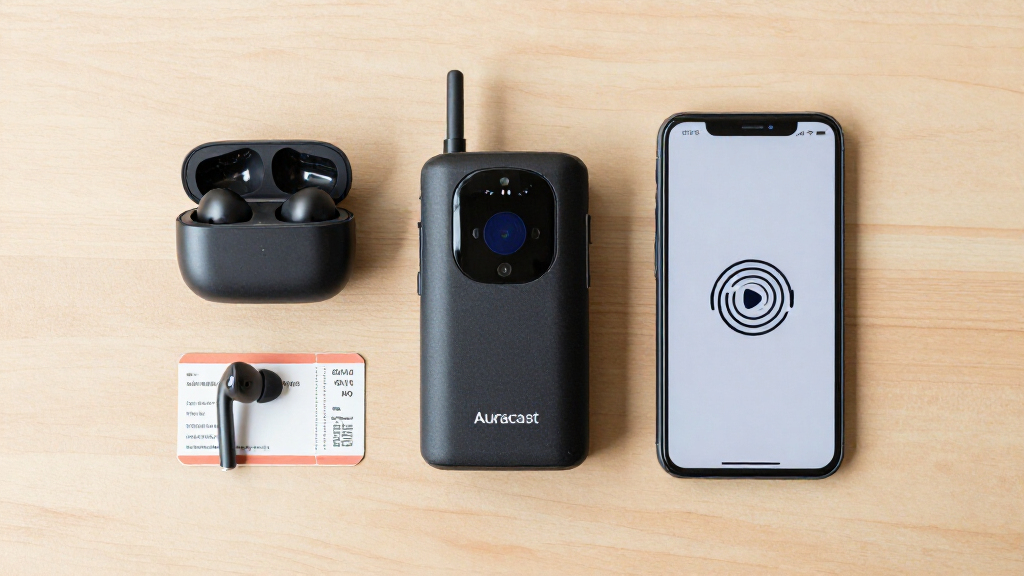
Auracast broadcasts audio from a venue to compatible hearing aids, headphones, earbuds and dedicated receivers. The technology is intended to help listeners hear more clearly where distance, background noise or room reverberation make a performance difficult to follow. The playbook covers system selection and installation, testing with people who have lived experience, front-of-house staff training and support on the day of an event.
It also advises venues to explain availability across the audience journey, including on booking channels, websites, signs, customer emails and promotional materials. The resource is aimed at the practical operation of a listening service, rather than installation alone. RNID and GN Hearing say it is available now at RNID’s Auracast playbook page.
Making Listening Systems Easier to Use
The guide addresses factors beyond the availability of compatible broadcasting equipment. Audiences need information about the service, instructions for connecting and access to assistance if problems arise. The playbook recommends that venues address these elements, but does not establish that following its guidance will produce consistent results across venues.
RNID’s release puts the potential audience in the UK at around 18 million people who are deaf, have hearing loss or tinnitus. The guidance may also be relevant to hearing care professionals introducing patients to Auracast and helping them identify venues that offer it. Its practical impact will depend on venues adopting the recommendations and making compatible systems available.
Products Worth Considering

Hyperice Normatec 3 Leg Compression Boots – Full Leg Recovery, Standard Size

Oral-B iO Series 5 Rechargeable Electric Toothbrush with Travel Case, White

Fitbit Sense 2 Smartwatch – Blue Mist / Pale Gold
As an affiliate, we earn on qualifying purchases.
Auracast in Public Venues
Auracast is a broadcast-audio feature designed to send a shared audio stream to compatible personal devices or receivers. For a theater audience member, that may offer an alternative way to access performance audio, but compatibility matters: the venue’s equipment and a listener’s device must support the technology, or a suitable receiver must be provided.
The report cites Vue Cinemas in the UK and Ireland and the Sydney Opera House as examples of public venues where Auracast has been deployed. Those examples provide context for the playbook’s release; they do not establish how widely the system is available across theaters. The guidance was developed in a UK setting, although RNID technology lead Alastair Moore said its principles could apply internationally despite differences in regulation and health care systems.
“Installation alone is not the finish line.”
— Alastair Moore, technology lead at RNID
Adoption and Compatibility Remain Open
The release does not say how many theaters will adopt the recommendations, whether venues will provide compatible receivers for people without Auracast-enabled personal devices, or what implementation costs may be. It also gives no timetable for wider rollout. A guide can set out recommended practices, but it cannot confirm that a particular venue’s system is available, functioning or suitable for every audience member.
The source material does not report independent evaluations of venues using the playbook or measured changes in audience experience. People planning a visit may still need to check directly with the venue about device compatibility, equipment availability and on-site assistance.
Venues Put the Guidance Into Practice
The playbook is available now for venues to consult. The next step will be whether theaters and live-performance operators use its recommendations when selecting or updating systems, training staff and publicizing access arrangements. RNID and GN Hearing have not announced specific venues adopting the guidance or a schedule for further implementation.
For audiences, information and support will depend on individual venues. People can ask a theater in advance whether Auracast is available, which devices work with its system and whether a receiver can be borrowed. The source material does not set out a single connection process for all venues, so details may vary.
Key Questions
What is Auracast for Theatres?
It is a playbook from RNID, supported by GN Hearing, with guidance for theaters and live-performance venues on implementing and communicating Auracast assistive listening.
How does Auracast assistive listening work?
A venue broadcasts audio to compatible hearing aids, headphones, earbuds or dedicated receivers. A listener’s device must be compatible with the system, or the venue must offer another suitable option.
What does the playbook cover?
It covers system selection and installation, testing with people who have lived experience of hearing loss, staff training, support during a visit and communication through booking channels, websites, signage and other materials.
Where can venues find the guide?
RNID says the playbook is available now at www.rnid.org.uk/auracast-playbook/.
Does the release say all theaters will offer Auracast?
No. The playbook offers implementation guidance, but the report names no rollout timetable or commitment from theaters to adopt it. Availability and device compatibility will need to be confirmed with each venue.
Source: rss