
TL;DR

Get health and wellness essentials delivered free with Prime
- Fast, free delivery on millions of items
- Prime Video, Amazon Music and more included
- Member-only deals all year
Researchers from Virginia Commonwealth University and Emory University tested HomePal, a system that tracks patterns such as movement, sleep and phone use, in the homes of 70 adults aged 65 and older. They are comparing sensor data with loneliness assessments; the system is still under development and is not a diagnostic tool.
Researchers from Virginia Commonwealth University and Emory University have tested a home sensing system called HomePal in 70 independently living adults aged 65 and older, collecting everyday behavior data to study whether it can help identify patterns associated with loneliness. The system is a research prototype, and its ability to identify loneliness has not yet been established.
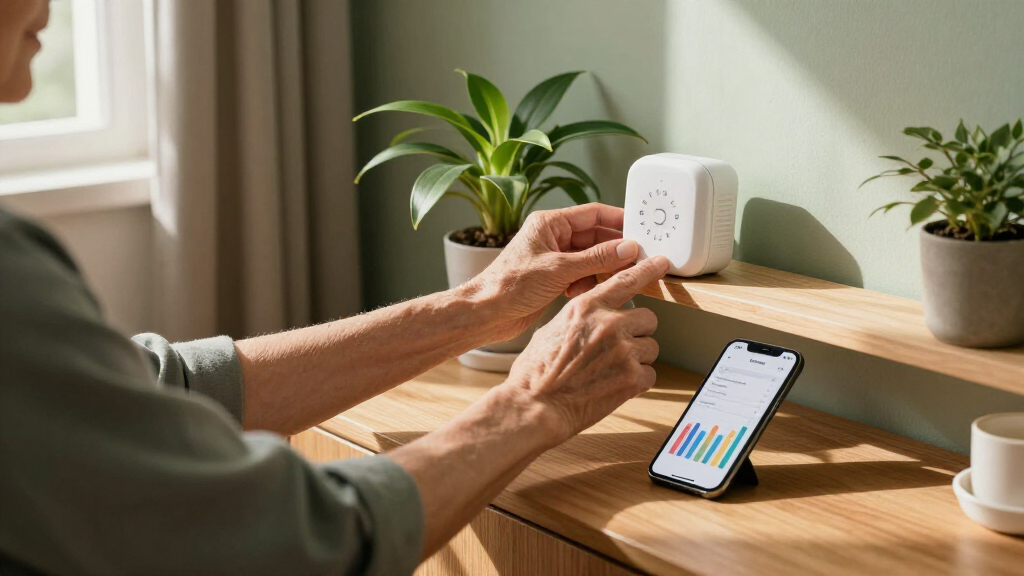
HomePal combines commercially available and custom sensors to passively record aspects of daily life, including movement, sleep, television use and phone activity. The researchers deployed it in participants’ homes in the Atlanta metropolitan area for three months. The sensors are intended to capture behavioral patterns, not to directly ask participants whether they feel lonely.
The team plans to compare the collected data with loneliness assessments conducted every two weeks. Researchers are using an AI model to examine which patterns, if any, correspond with participants’ reported feelings. The study describing the system was published in the journal Assessment; the report does not provide a final accuracy result for the model.
Sensor inputs include motion and door sensors, smart plugs that estimate television use, sleep sensors and smart speakers that may capture speech patterns. The system also monitors phone-call patterns as a possible measure of social connectedness. Researchers say these signals could help caregivers notice changes over time, but any such use would depend on further analysis and validation.
A Possible Early Signal at Home
Loneliness can be difficult for caregivers and clinicians to recognize during occasional appointments, particularly when an older adult does not raise the issue. A system that tracks changes in everyday routines could, if shown to work, offer another way to identify people who may benefit from a conversation or support.
The intended role is to flag patterns for follow-up, not to diagnose a person or determine treatment. Changes in sleep, movement or phone use can have many explanations. The researchers’ comparison with regular assessments is meant to test whether those measurements relate to reported loneliness rather than assume that any single behavior proves someone is lonely.
A future version might present caregivers with a daily score or longer-term trend. That could affect how families or care teams decide when to check in, but the study has not shown that such a score improves care, prevents health problems or produces a reliable clinical measure.
Products Worth Considering

Oral-B iO Series 3 Rechargeable Electric Toothbrush for Adults, Black

Oura Ring 4 Smart Ring – Silver – Size 8

Blueair Blue Pure 511i Max Smart Air Purifier
As an affiliate, we earn on qualifying purchases.
How HomePal Is Being Tested
The project brings together researchers in computer science and nursing. Study lead author Mohamed Kamel, a computer science doctoral student at VCU, described the research question as whether ordinary behavior at home could provide early signs of loneliness or social withdrawal. Former VCU nursing professor Chung led the loneliness assessments used for comparison.
In the current phase, the team is still developing its models and deciding which sensed patterns are most informative. The researchers have described a possible commercial system that could be installed in a home much like a security system, but that is a longer-term aim, not a product shown to be ready for use.
Privacy is also part of the design discussion. The report says HomePal could be modified to use sensors that process or store data on local networks, and that researchers are considering which information might be shared with caregivers. The current setup includes smart speakers and smart television plugs, so the extent of data collection and sharing would depend on the system’s final configuration.
“The main idea is to see whether everyday behavior at home can give early signs that an older adult may be experiencing loneliness or social withdrawal.”
— Mohamed Kamel, study lead author and VCU computer science doctoral student
Accuracy and Privacy Questions Remain
The researchers have not reported how accurately HomePal’s models can identify loneliness, which behaviors are most strongly associated with assessment results, or whether the system can distinguish loneliness from other reasons for changes in routine. The supplied study report describes ongoing model development and planned comparison with assessments, not a validated result.
It is also not clear what thresholds would trigger a caregiver alert, how often alerts might be wrong, or whether tracking would be acceptable to older adults in everyday use. The report does not specify a final policy for data retention, access or caregiver sharing. Those details would matter if the research moved toward a product used in homes.
Researchers Continue Model Testing
The team plans to continue analyzing the HomePal data, refining its AI models and adjusting the sensors as it examines how recorded patterns compare with the biweekly loneliness assessments. The next substantive evidence will be whether the models can identify meaningful associations and how accurately they do so against participants’ reports.
Researchers have not announced a commercial launch or a date for a validated system. Until further results are available, HomePal remains a research project that could help prompt follow-up, not a proven loneliness screening or diagnostic service.
Key Questions
What is HomePal?
HomePal is a research prototype that combines home sensors to collect information about activity, sleep, television use, speech-related patterns and phone calls.
How many people took part in the pilot?
The researchers deployed the system for three months in the homes of 70 adults aged 65 and older who were living independently in the Atlanta metropolitan area.
Can HomePal diagnose loneliness?
No. The research team says the system is intended to study behavior patterns that may be associated with loneliness and could warrant follow-up. Its diagnostic accuracy has not been established.
How will researchers test whether the signals are meaningful?
They plan to compare sensor data with loneliness assessments conducted every two weeks and assess how well their developing AI models correspond with participants’ reported feelings.
What is known about data privacy?
The researchers say the system could be adapted to process or store data locally and that caregiver sharing could be limited. Final privacy, access and retention arrangements have not been reported.
Source: rss